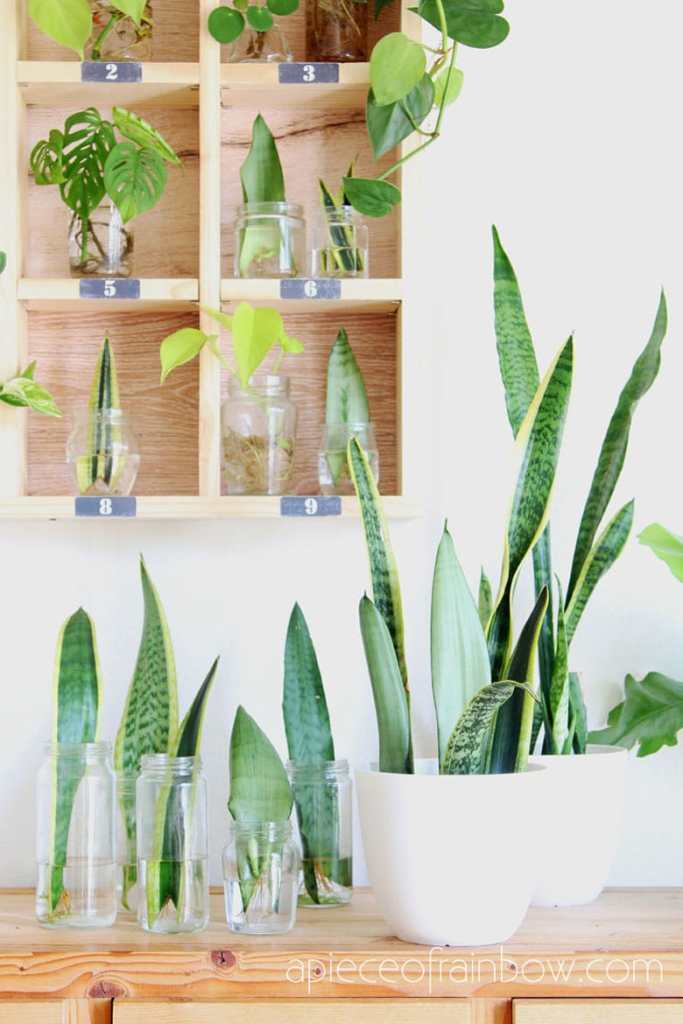
Snake plants are a great houseplant for beginner or experienced plant owners because they are flexible and incredibly low maintenance. Read on to find out how you should take care of this amazing plant!
Photo from: The Spruce / Alonda Baird
Water: Snake plants do not need to be watered often. If you water them too much, they will rot and die. An easy way to avoid this is to keep your snake plant in a pot with drainage holes, so extra water can drain out when you water the plant. You only need to water your snake plant once a month!
Sun: Snake plants can tolerate and grow in a wide range of light. They will enjoy full sun, but will still thrive in full shade. Snake plants can survive in places with no light for over a month!
Fertilizer: Snake plants do not need to be fertilized often. A good rule of thumb is to use all purpose plant food, like this one, every spring. Make sure you don’t feed your snake plant too much or their roots can get burned!
Snake plants can be grown in many different ways and places, which make them perfect for any plant enthusiast. From beginner to expert, snake plants are a prized addition to any plant-lover’s collection!
Taking care of houseplants doesn’t have to be super hard or complicated. Learn how you can keep your plants alive!
In order to keep your plants alive, you need to make sure you are giving them the right amount of water and light. Different plants need different amounts of each, but you can treat most of your plants the same.
Most houseplants can grow in places with less sun, but if you put them in spaces with higher light levels, they will grow faster. So if you can, put your plants in a spot that gets the most light as possible. When it comes to watering your plants, it is very important to make sure you do not give them too much water. Most beginner plant owners kill their plants simply by watering them too much! Normal houseplants should be watered once their soil is mostly dried out. If you are not sure if your plant’s soil is dry yet, use the chopstick/toothpick method to find out.
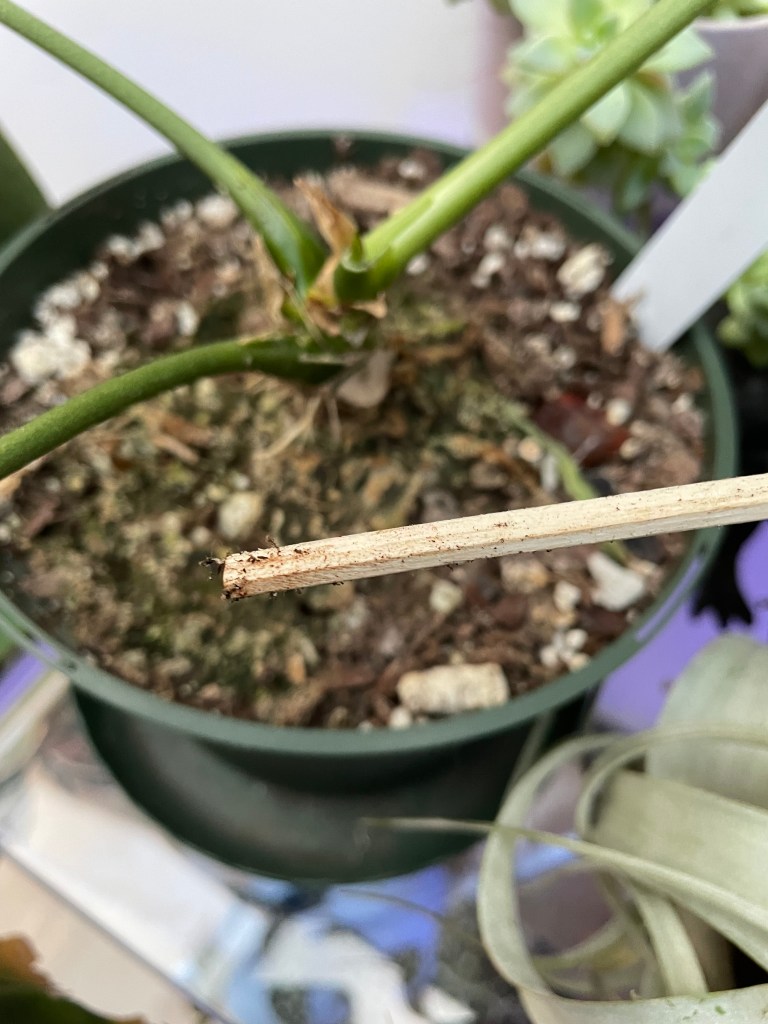
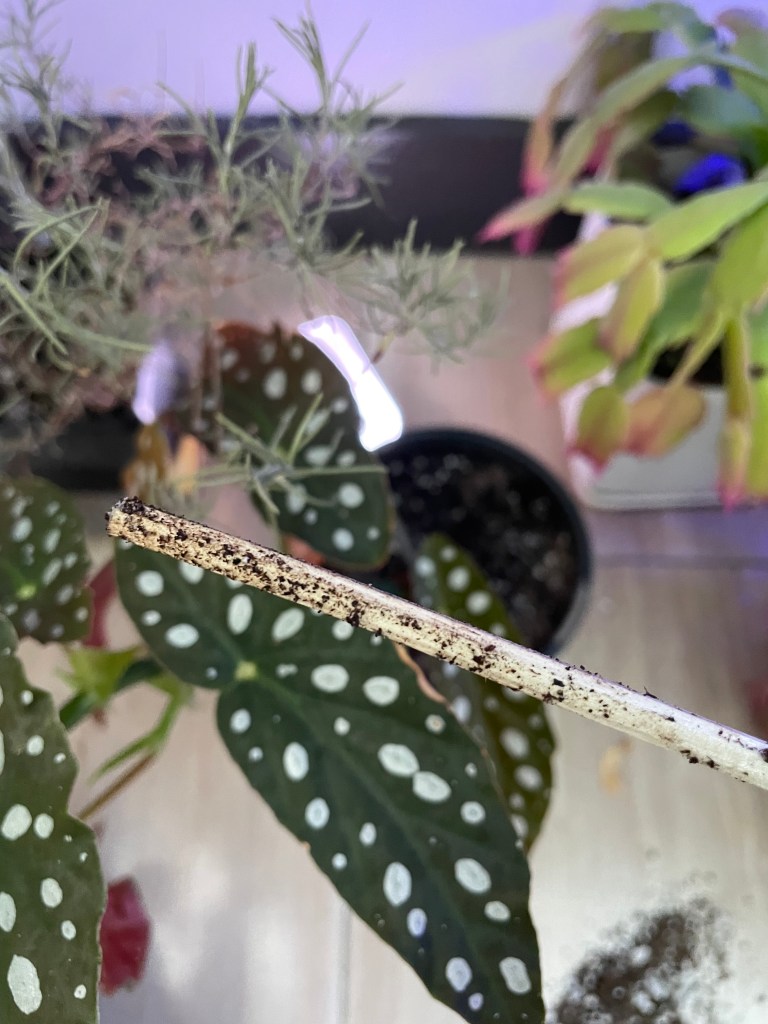
How to find out if a plant’s soil is dry or wet. Take a wooden chopstick or toothpick (depending on how big the pot is), and stick it into the edge of the pot until it reaches the bottom. When you pull it out, look at how much soil is stuck to the stick. If the stick comes out mostly dry/clean, the soil is completely dry and ready to be watered. If the stick comes out with dirt stuck to it, then the soil is wet and you do not need to water your plant right now.
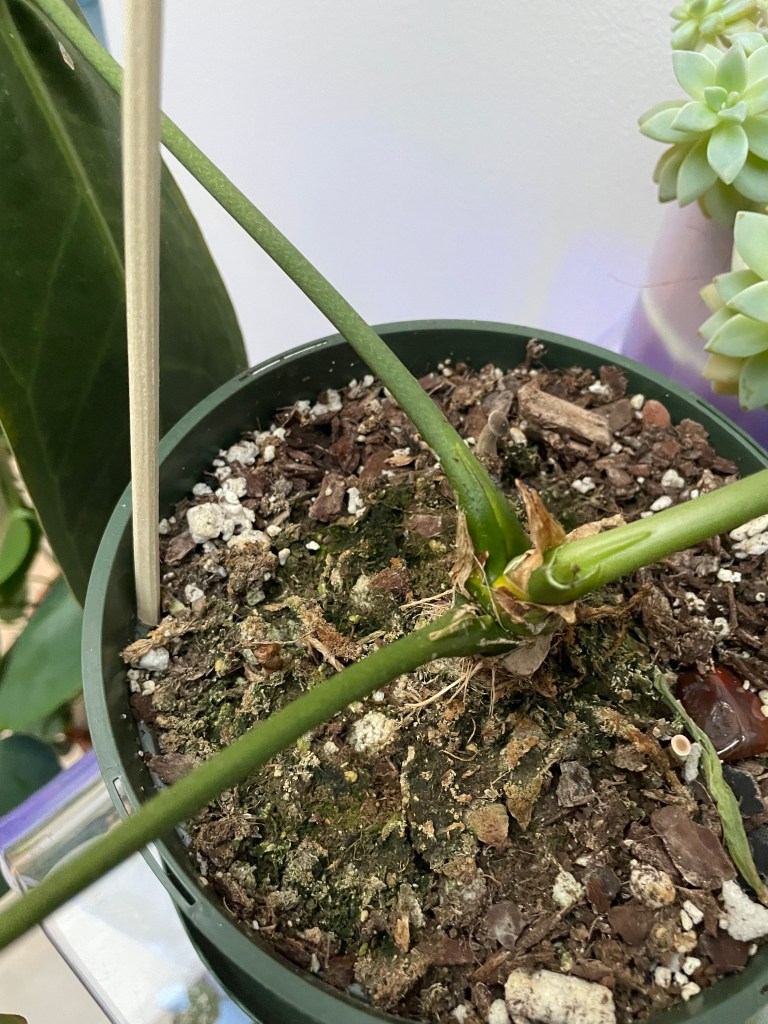
There is not a lot of soil sticking to the stick, so the soil is dry.There is a lot of soil sticking to the stick, so the soil is wet.
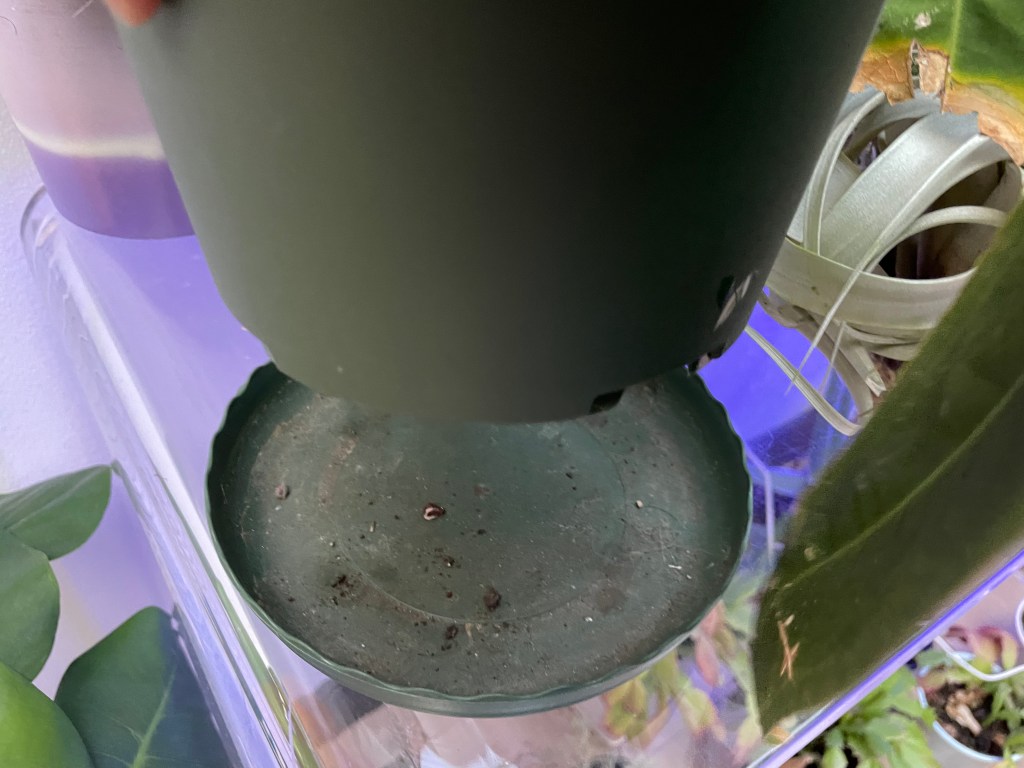
If you are a beginner to growing houseplants, It is a very good idea to make sure your plant’s pots have drainage holes in them. That way, if you accidentally water your plant too much, the excess water will just drain pout instead of just sitting in the pot and ultimately killing your plant. If your plant is in a pot with drainage holes, make sure you have a saucer or tray under it to catch the excess water that drains out when you water your plant.
This pot has drainage holes, so I put a saucer under it to catch the water that drains out.
If your plant is in a pot with drainage holes and its soil is dry, water it until the extra water comes out the bottom. Make sure you empty out the saucer once you are done watering so your plant is not sitting in water.
That is it! Those are the basic things you need to to know to take care of your houseplants! It might seem super hard and complicated at first, but over time taking care of your houseplants will seem super simple and easy! If you have any questions about plant care, leave a comment down below and I will do my best to answer it!

:max_bytes(150000):strip_icc()/snake-plant-care-overview-1902772-04-d3990a1d0e1d4202a824e929abb12fc1-349b52d646f04f31962707a703b94298.jpeg)
 Tiger Shakti