Garden vocabulary #1

In this series I am going to explain some of the gardening words that I use in my posts that you might not understand. This first post will be about differing plant needs like sun and water, and the words I might use to explain them. These explanations of garden vocabulary might be different than what they actually mean. This is just how I use these words in my blog posts. Let’s get started!

Sun & Shade Full sun-Means 6 to 8 hours of (direct) sunlight or more Partial sun-Means 4 to 6 hours of (direct) sunlight Partial shade-Means less than 4 hours of direct sunlight Full shade-Means barely any direct sunlight, mostly shade

Water Overwater/ing- Means giving a plant too much water Underwater/ing- Means not giving a plant enough water

Fertilizer Heavy feeders-Means a type of plant needs a lot of nutrients and fertilizer Burning a plant-You can burn a plants roots or shock the plant by giving it too much fertilizer

Planting Transplanting-Means moving a plant from one patch of soil or container to another Shock/Transplanting shock-Means shocking or damaging a plant when transplanting

That is it for todays post! If you have any questions about this post, feel free to comment below! Bye!
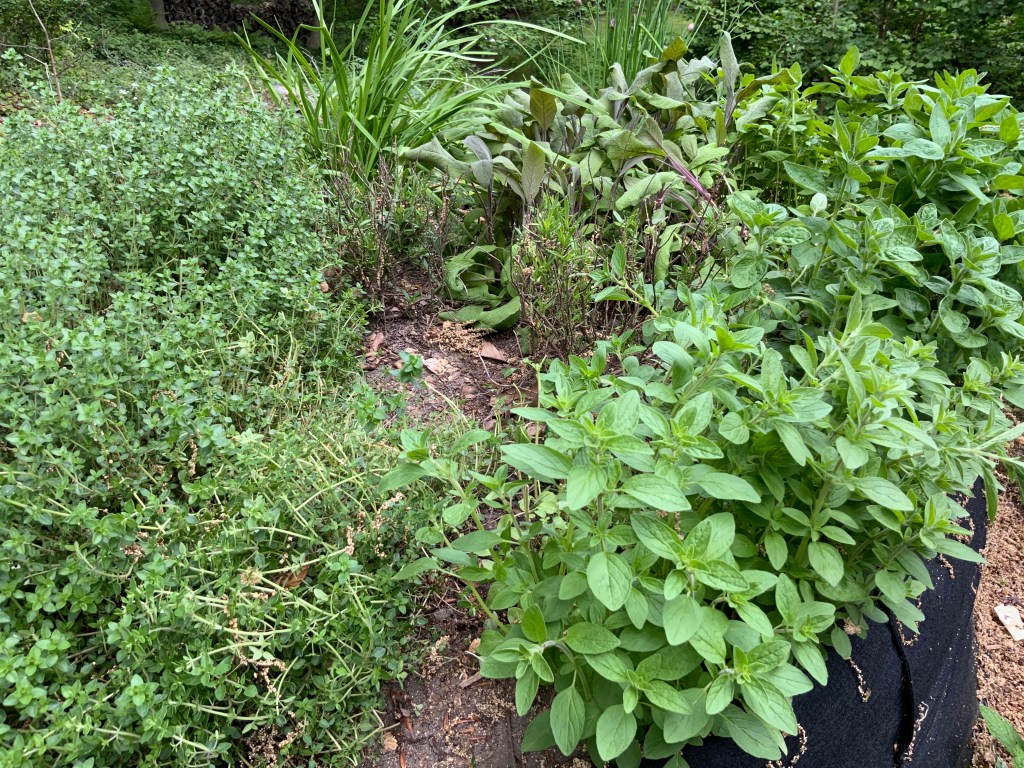
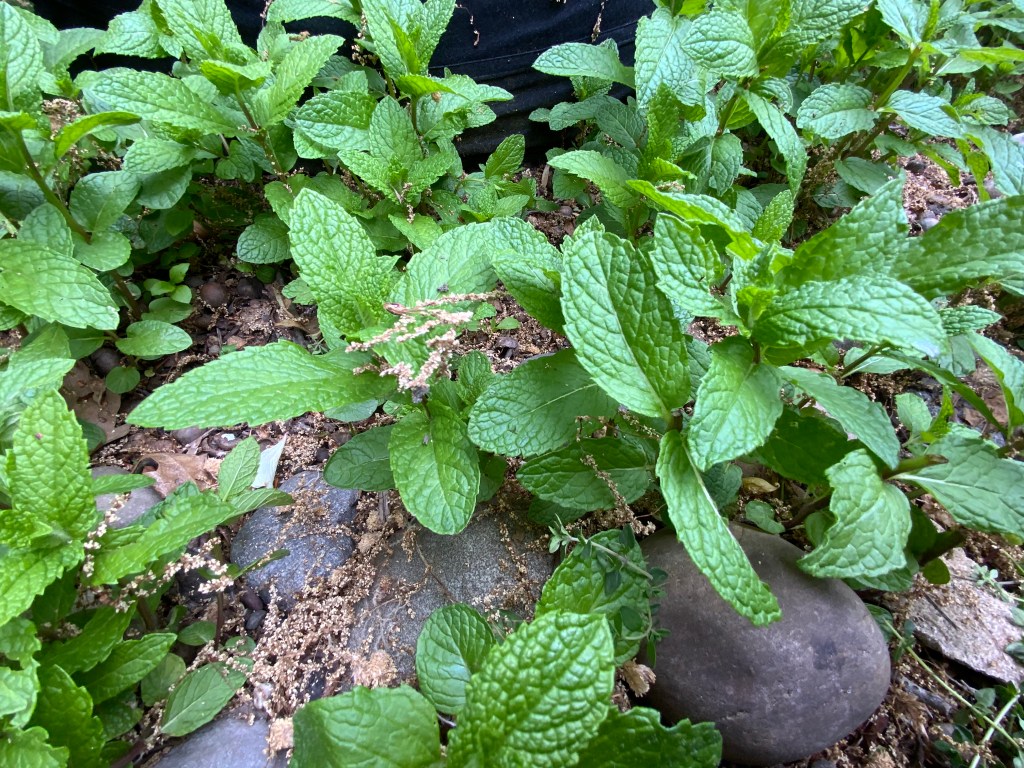
Garden bounty!

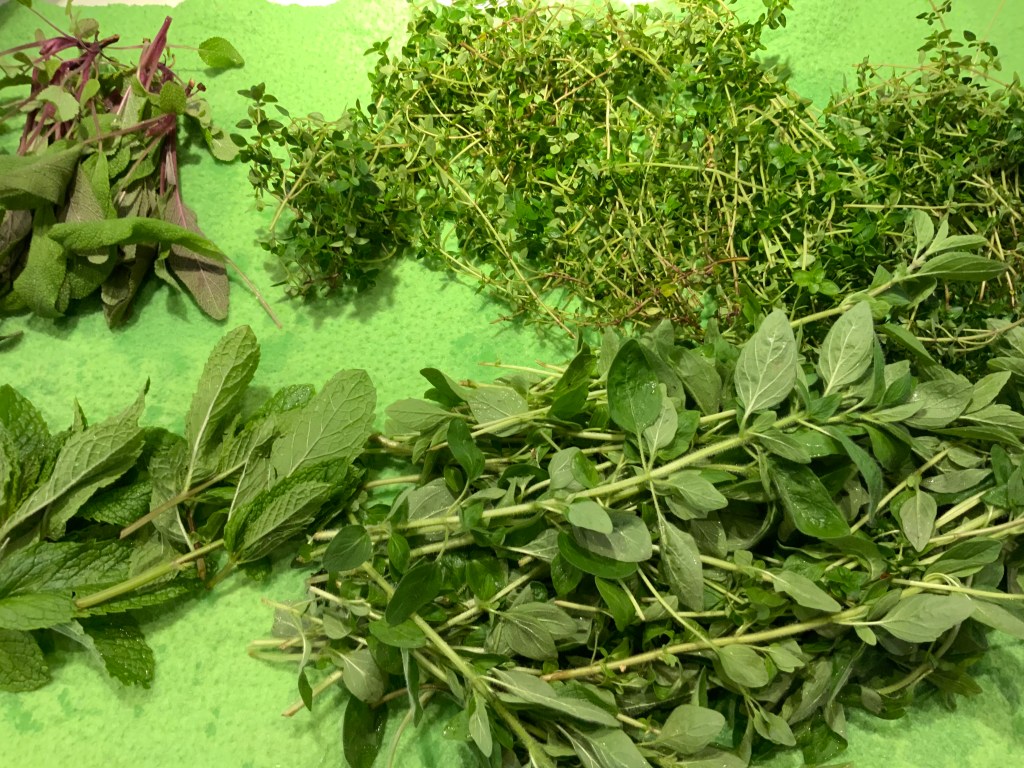
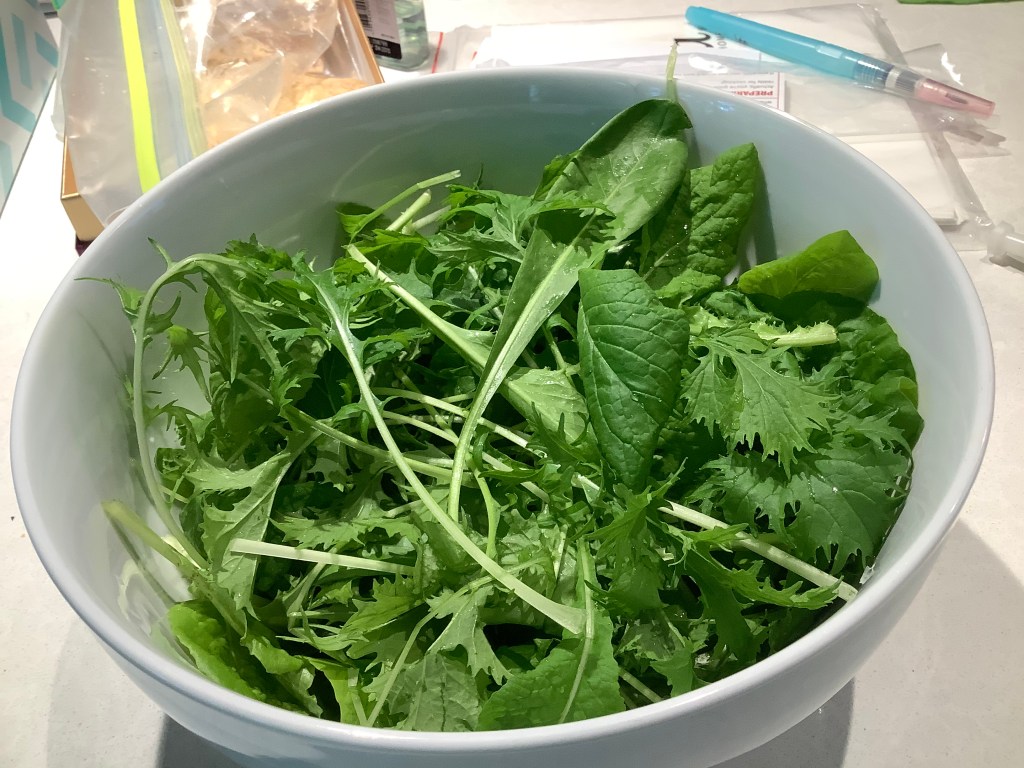
Over the last few days, we have been harvesting salads, radishes, and herbs from our garden. In this post, you are going to see, that even if you have bad soil, not much sun, nibbling rodents, and more (like us), you can still grow a bountiful garden!

Here is our herb garden:

It does not get full sun and our soil does not drain very well, but look at what we have harvested from it!

(We have containers for most of our plants here to take care of the problem of bad soil. The soil has been loosened where the mint is in the ground.)

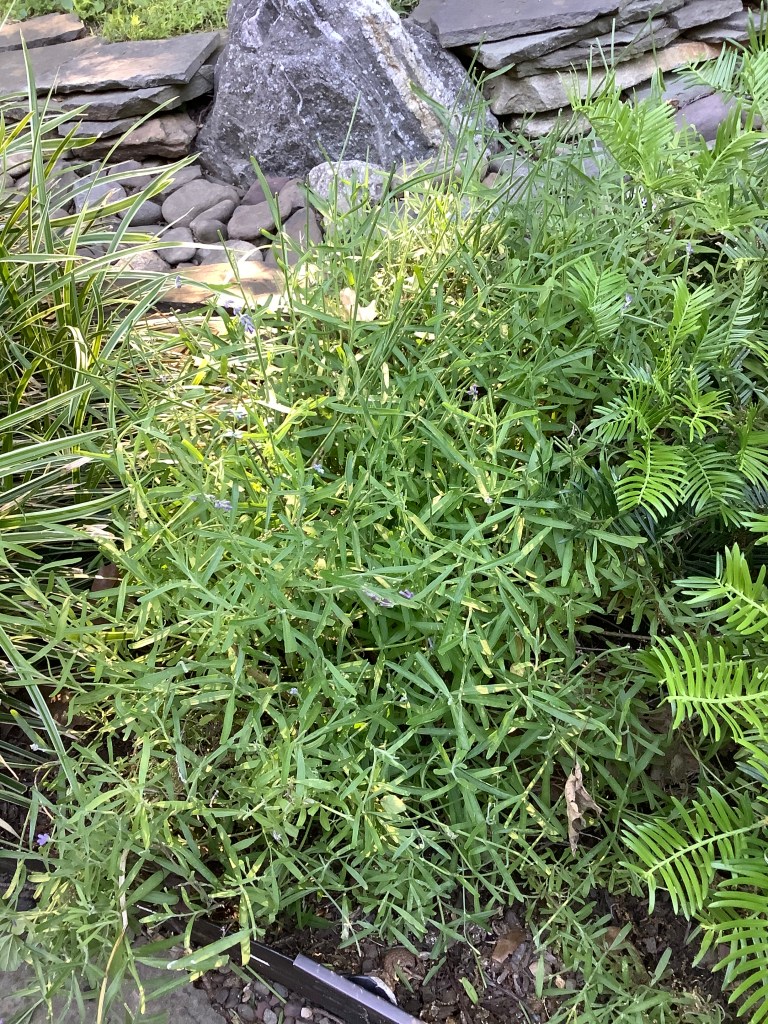
As you can see, we even have some lavender plants near this area. On the web, you will see that lavender likes full sun and well drained soil. Lavender plants will do better in full sun and well draining soil, but these plants have neither, and they are still doing fine.

In our mostly greens garden, we made a chicken wire and zip tie cage to protect the plants from animals that will eat them, and tilled the soil to help the plants grow. This space does not get full sun, but it still gave us a good harvest. In the summer heat, lettuce will bolt (when a plant starts to flower and their leaves taste bad) pretty quickly, so in this scenario, the shade might help. There is mostly bok choy (a plant with edible leaves) right now, because we harvested and pulled out the other plants, (they were bolting) and started seeds in the bare spaces.

These places in the garden that I showed you today are not the best spots for gardening, but we still have managed to get a bountiful harvest from them. Here are some of the things we will/have done to maximize our harvests. Firstly, we water our plants everyday, because in the summer/late spring heat, the soil will dry up very quickly. Also, every week or two we will fertilize our plants. This is especially important if you are growing your plants in containers or poor soil. Another thing you can do to get good harvests from your plants is to spray your plants with neem oil. Neem oil is an oil that keeps away or kills many plant bugs.

Keep in mind that many of these plants will do better in full sun and well drained soil if you can plant them in those conditions, but if you don’t have lots of sun or good soil, do not let that keep you from growing a garden! Bye now!

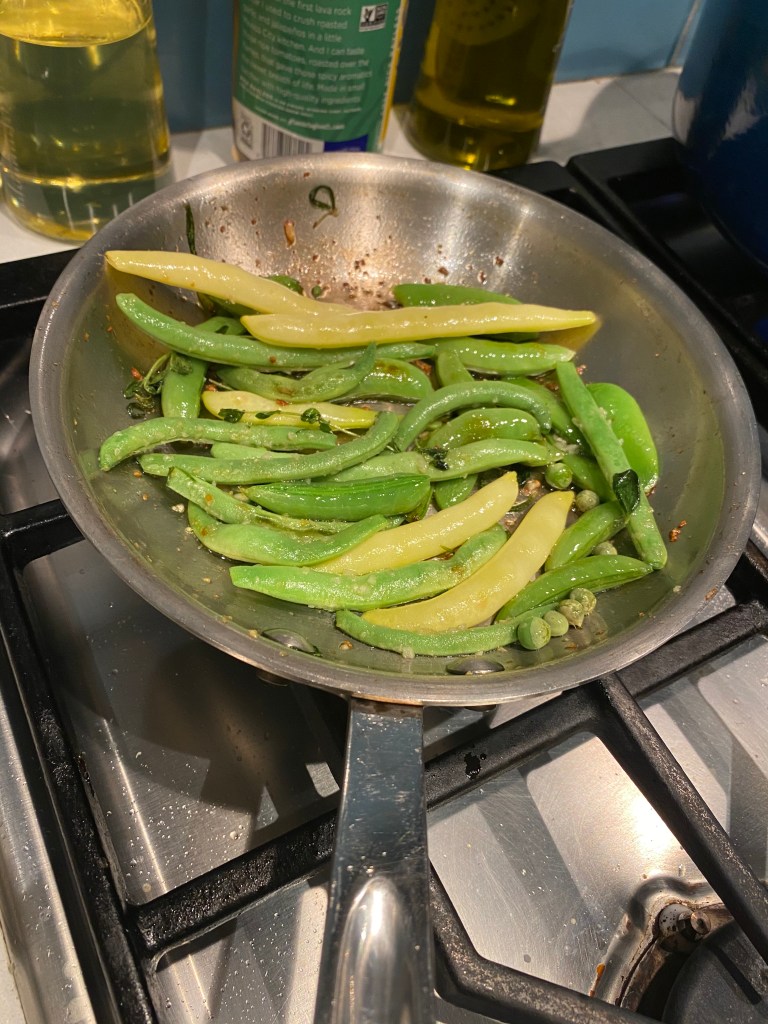
Home grown beans! (Grown in a partially shaded area!)

How to propagate succulents! Succulent series #2

Hi guys! Today I am going to show you how you can multiply the number of succulent plants you have for free! This is also a good option if your succulents are looking old and a bit worse for wear. Let’s get started!

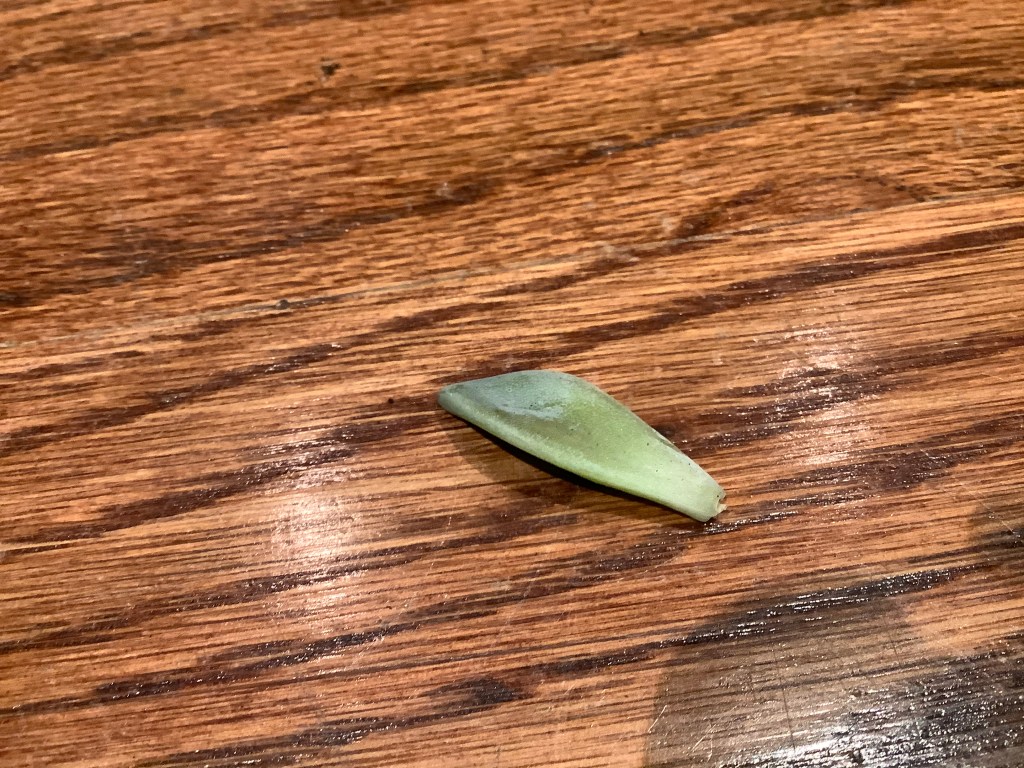
First you need to find out what type of a succulent you have. Some succulents have seeds, and some don’t and instead reproduce through fallen leaves! There are even succulents that don’t produce seeds till you take off their leaf! So here is how you can find out witch type of succulent you have.

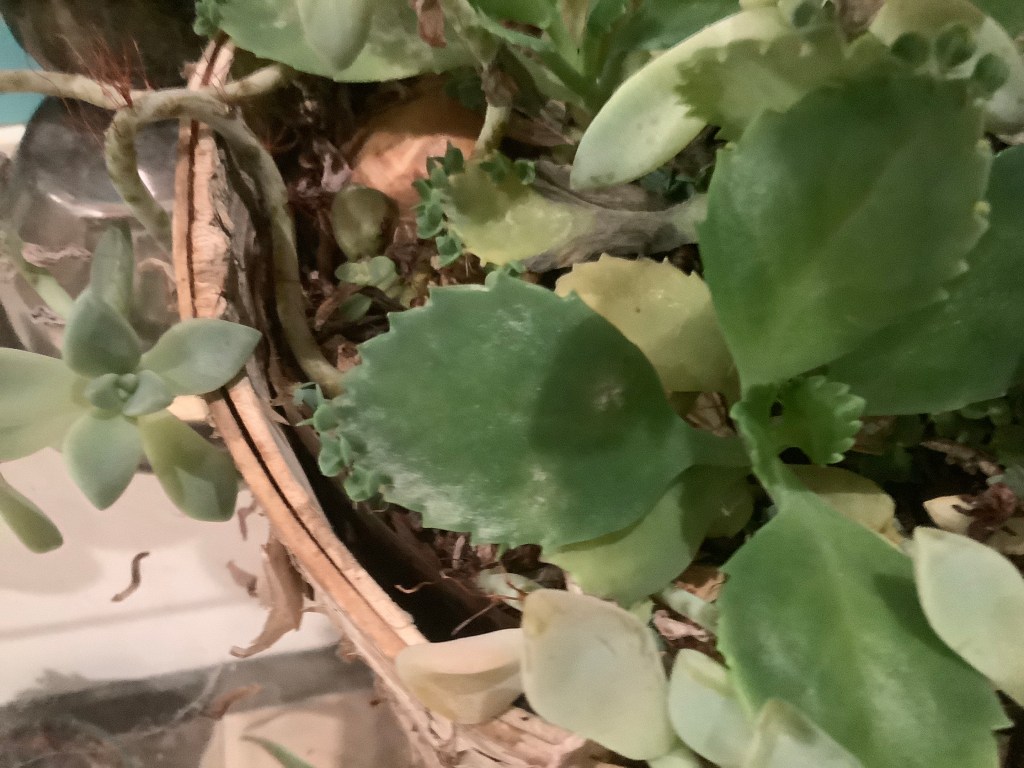
Look at your plant. If it has little seeds forming on the tips of its leaves, it is a seed propagating plant.

If it does not and it just has leaves and a stem, it is most likely a leaf propagating plant. You can also check the base of the plant and see if there are any roots where a leaf might have fallen off.

Now you actually need to propagate your plant. For a seed reproducing succulent, all you have to do is when you see little roots on the seed, take it off the mother plant and just place it on the surface of the soil. It will do the rest.

For a leaf propagating succulent, it is a bit more complicated. First you need to take off a fully grown leaf. To do this, gently secure the stem of the succulent with one hand, while the other hand just gently grabs the leaf, and takes it off. It should come off relatively easily.

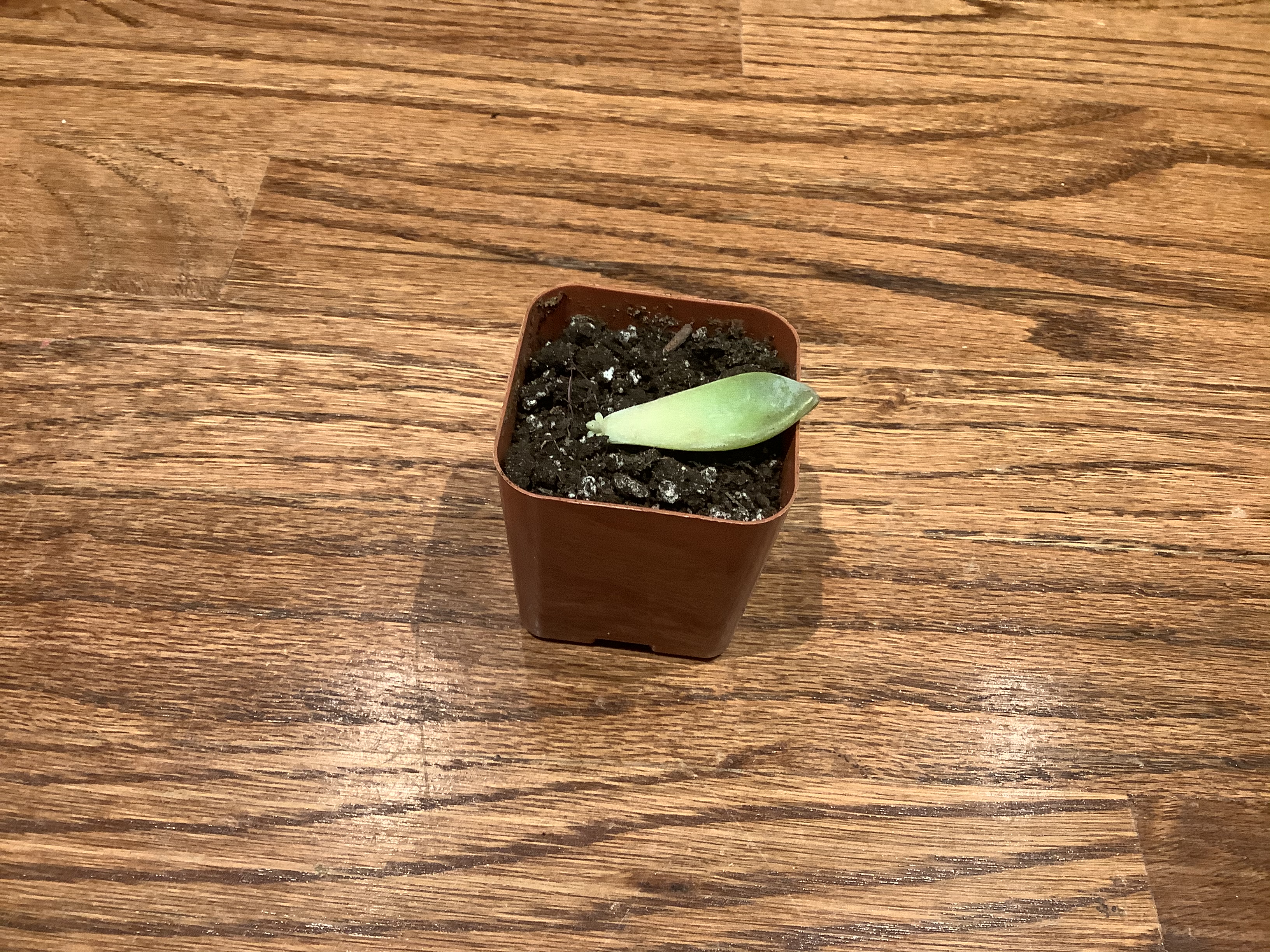
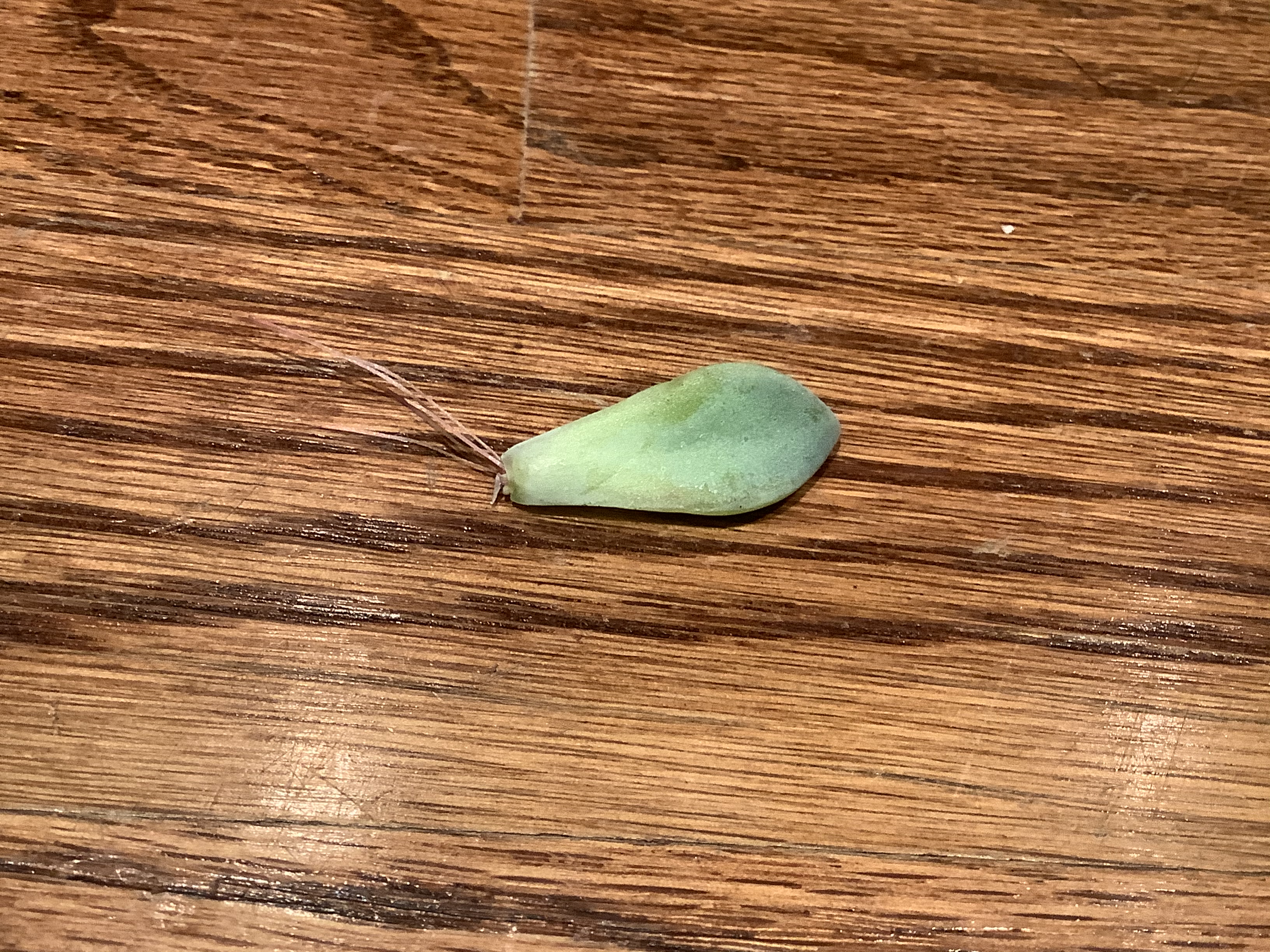
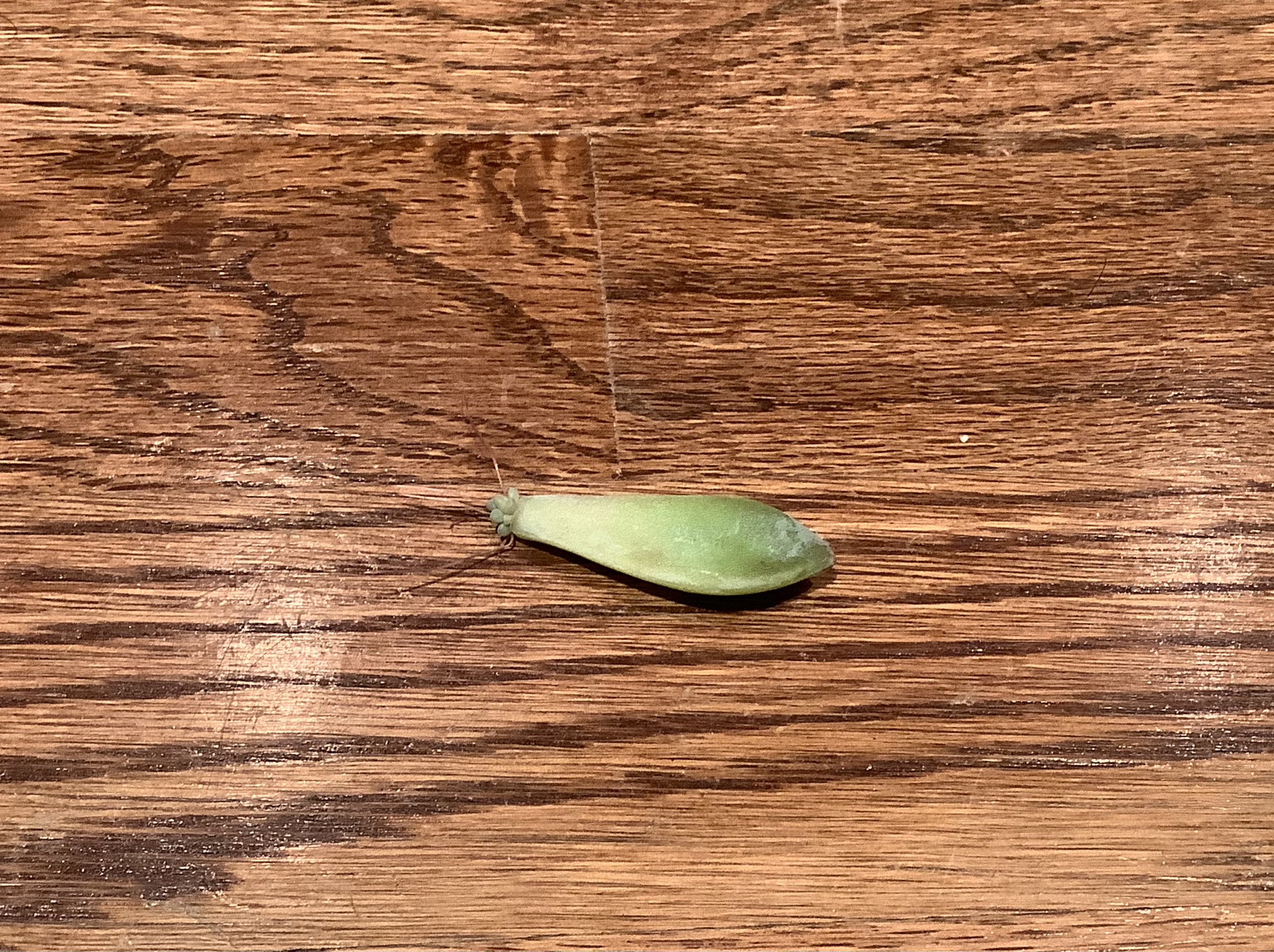
Then, let it sit and callous over for a few days. This way the edge of the leaf is sealed. After a few days, all you have to do is get a pot of soil and place the leaf on top of it. You can also do this when there are some roots and/or a mini plant on the edge of the leaf.

That’s it for today’s post! I hope you enjoyed it! Please check out our other posts! Bye!
How to save free seeds from your garden!


Hi guys! This post is #1 of a series for how to save seeds. This one is all about harvesting your seeds and setting them up for storage. Let’s get started.

First you want to chose your plant to take seeds from. If you are worried about cross pollination, (cross pollination is when a pollinator bees, wasps, etc. pollinate one type of a plant and then a different type of the same plant, that fruit is basically a combo of the two types of plants. Remember, you can always search this up) then take seeds from a plant that is far away from another plant like it but not the same.

Second, there are two main types of plants, hybrid and heirloom. The difference between the two is that when you save seeds from a hybrid plant, when you grow the seeds next year, the produce is a little bit different (in a bad way usually) and every tine you keep on saving seeds from a hybrid plant, the produce gets worse and worse. Heirloom plants on the other hand, when you save seeds from them, the seeds (not counting cross pollination) are basically the same produce as the other plant. This principle is usually used for tomato plants, and you can find out whether they are a heirloom or hybrid by looking at the tag, the seed packet, or by searching it up.

Another factor to saving seeds is the dryness/wetness. If it has been raining a lot recently, then you should let the seed pod/seeds dry a bit before you store them. If they are already dry, still let sit for a day or two just to be safe. You don’t want your seeds to rot in storage!

That’s it for today’s post! This post was all about setting up for saving and storing our seeds. In our next post, we will talk about how to do exactly that.

Bye! Please check out our 33 other painstakingly written posts!

Starting fall crops!

Hi guys! Today I am gonna go over the crops you can still plant NOW to gat a fall harvest. Let’s get started!

The first crop you can plant is arugula! Arugula cannot stand the heat and loves the cool weather. Arugula or rocket is a SUPER fast growing green and is amazing in salads. Sowing arugula seeds is really easy. All you have to do is grab some seeds and sprinkle them on the soil. Then water.


The second crop you can plant are radishes! Radishes are also a super fast growing root crop and you can also eat their leaves in salads. To start the seeds, use your finger to make a trench in the soil that is about a half inch deep. Then, sprinkle the seeds in the trench. Then water!


The next crop you can plant is lettuce! Lettuce is a great crop that does really well in cool weather and grows pretty darn fast too! Lettuce needs light to germinate so start the seeds like you would arugula.


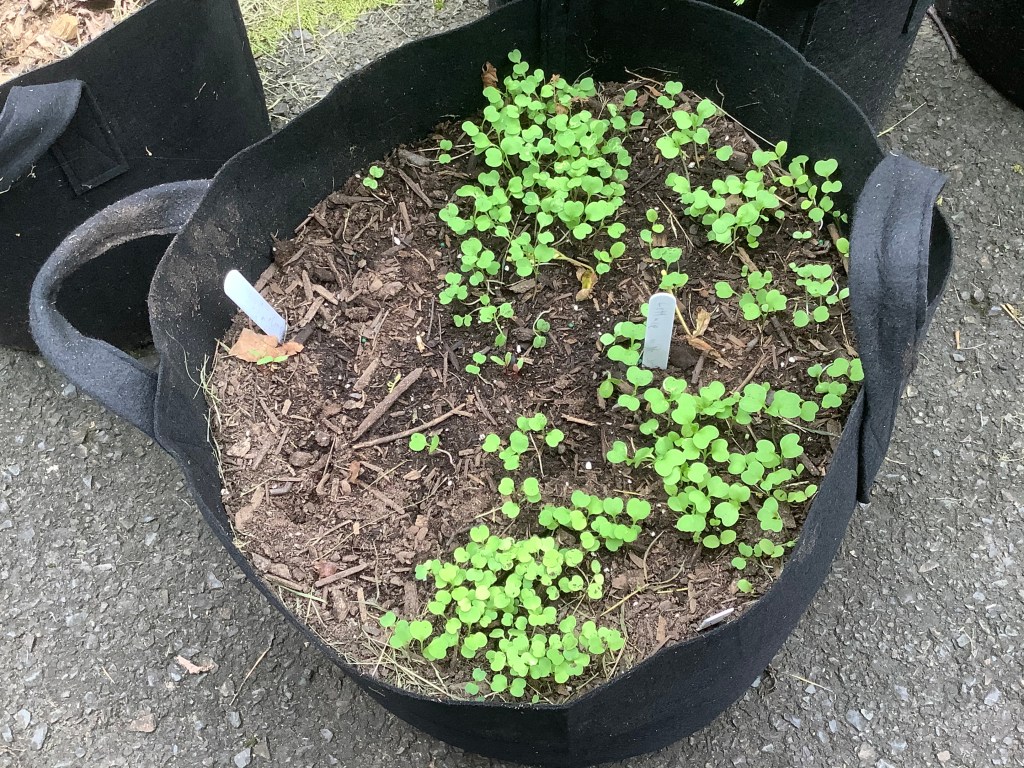
The last crop is bok Choy! Bok Choy is a Chinese lettuce and is a great fall crop. It loves the cool weather too! Sow bok Choy like any other lettuce.


That is it for today’s post! I hope you enjoyed it and learned something. Now go plant your fall crops! Bye!
Propagating tomato plants update!

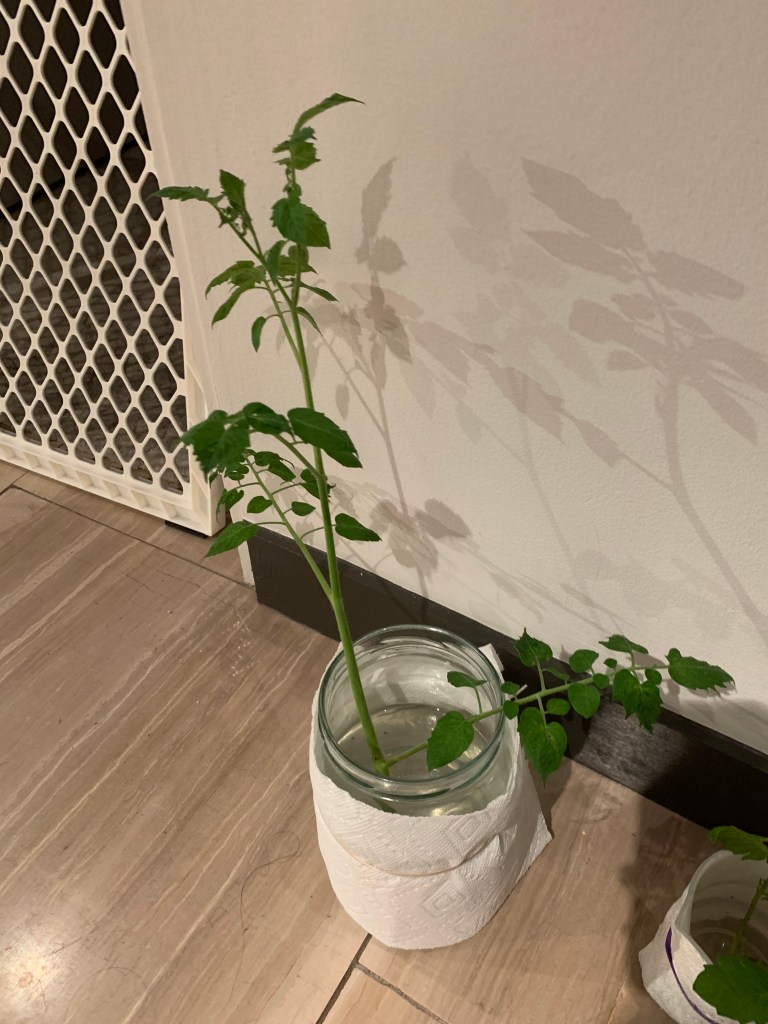
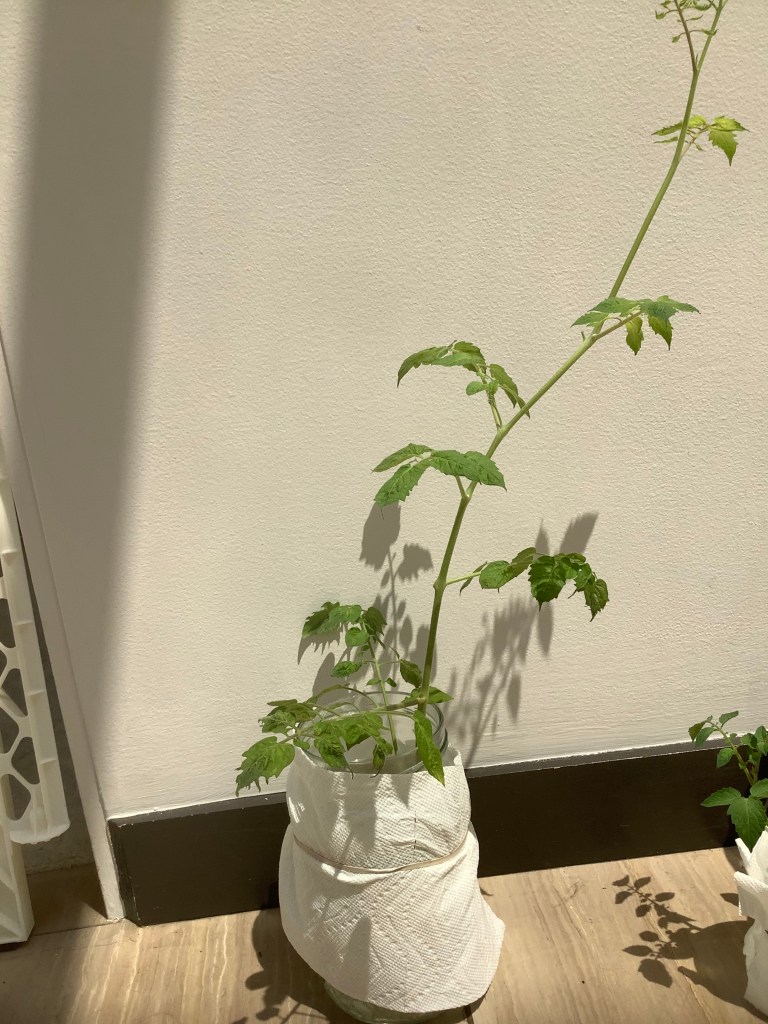
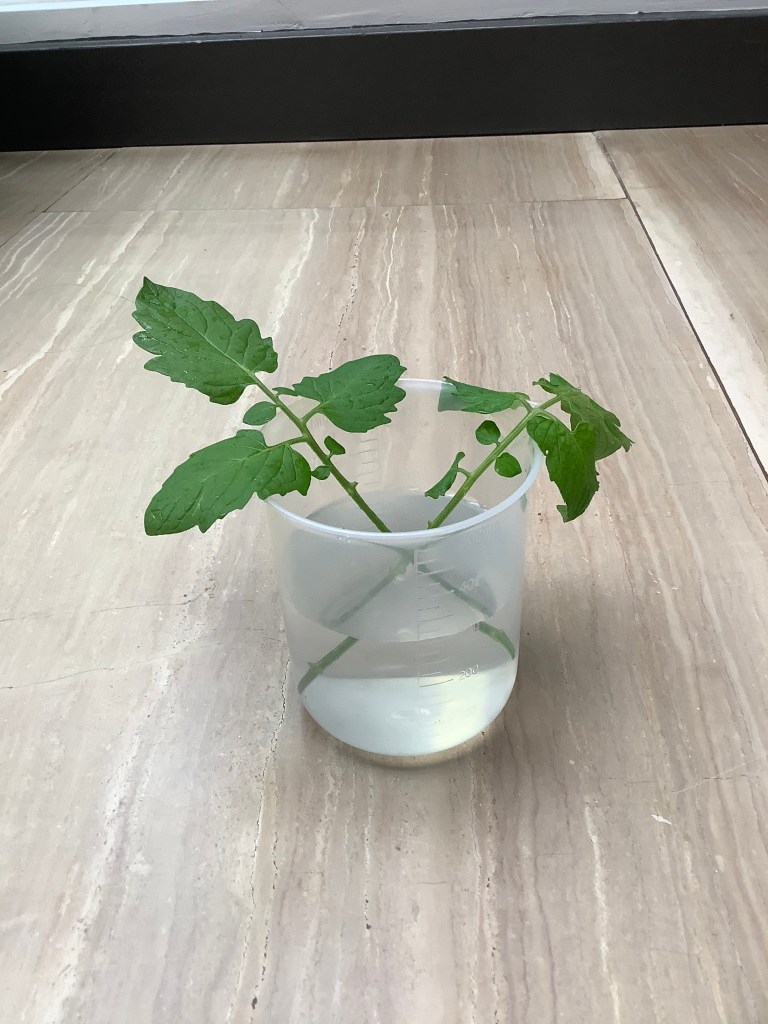
The tomato branch and leaves after 7 days:

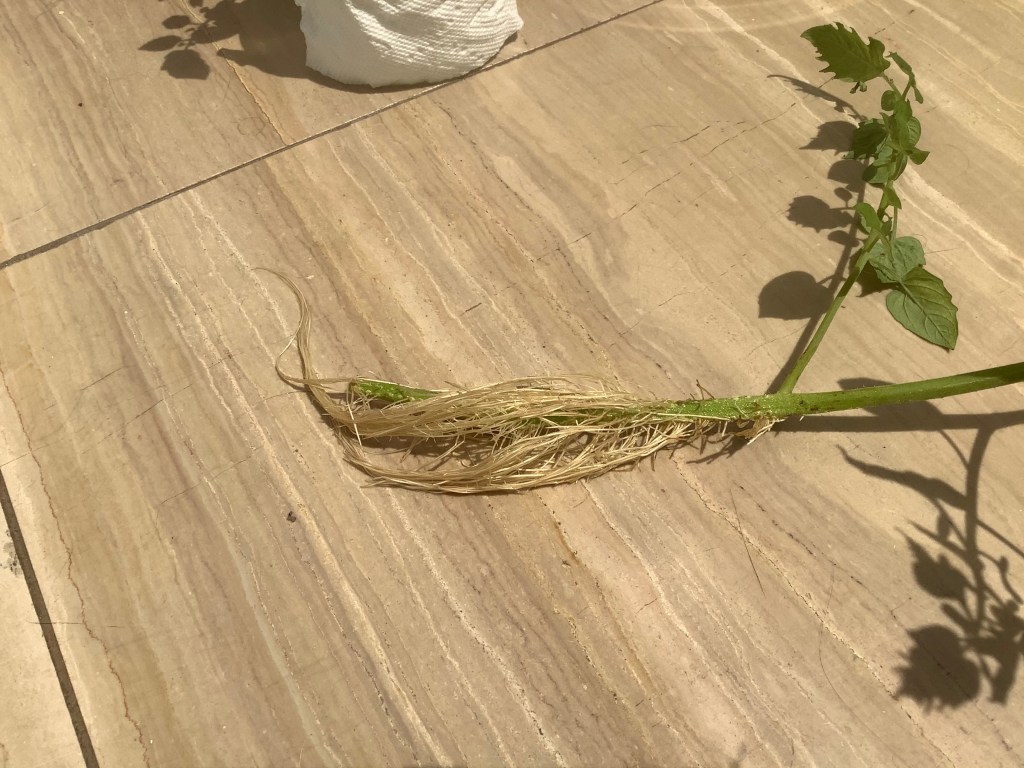
Here is the tomato branch after a little over two weeks:

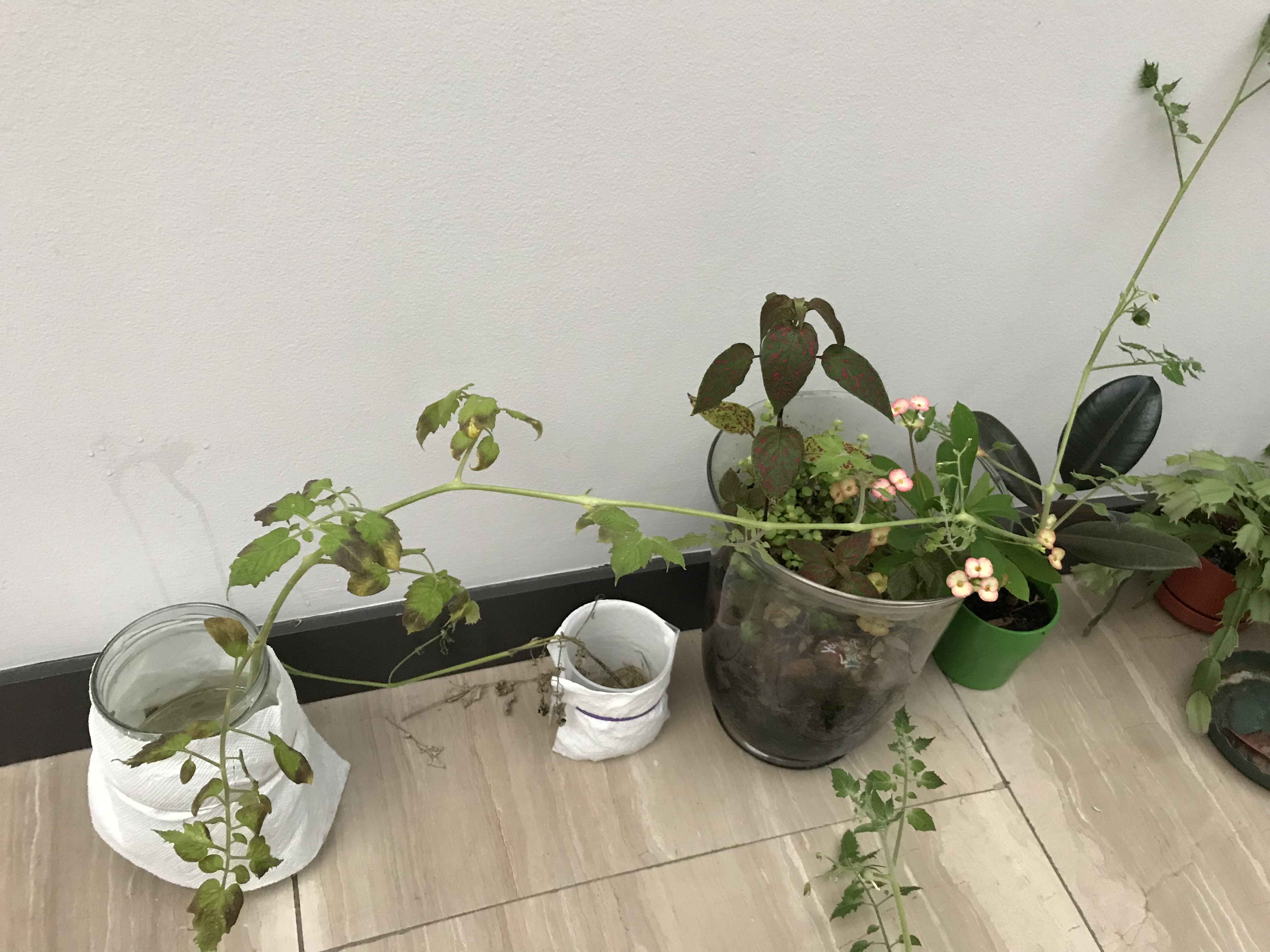
And finally, here is the tomato branch after about a month:

Propagating tomato tips:

-Change the water out every couple days. This is because the water doesn’t really have a lot of nutrients for your tomato plant. So changing the water out makes sure that your tomato branch grows roots.

-When I propagated my tomato plant, I left it in the water for a pretty long time. When you are propagating your tomato branch you do so that have to wait a whole month. You can plant your tomato branch after two to three weeks.

That is today’s post! I hope you learned something. Stay tuned for my next post, Bye!
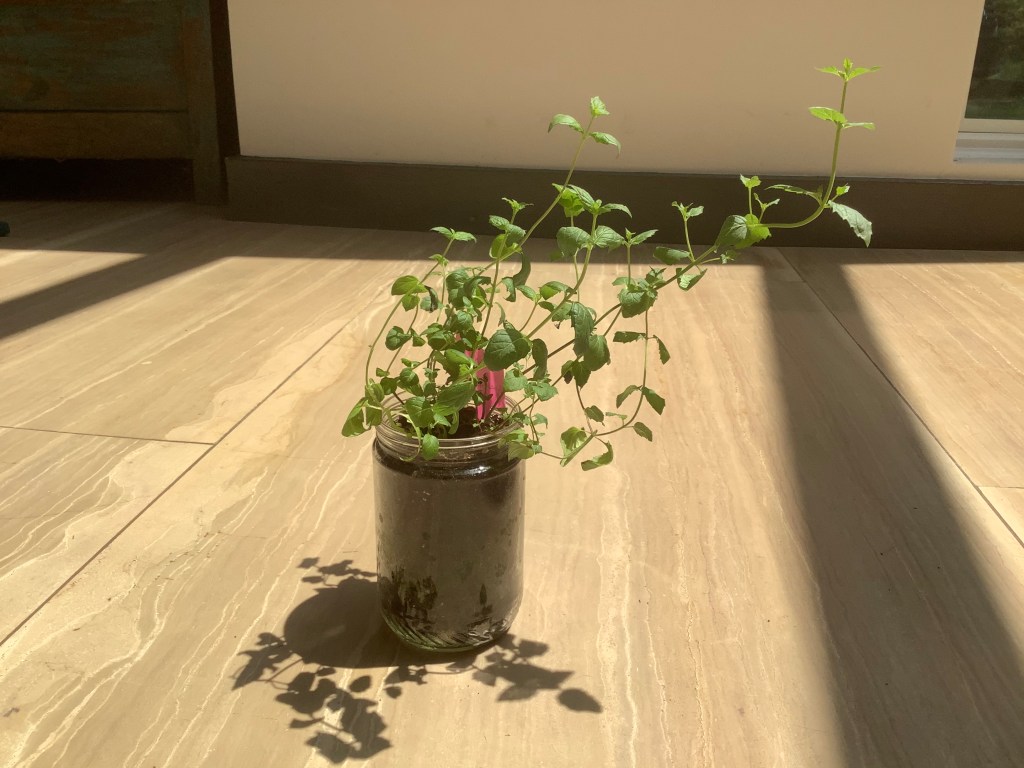
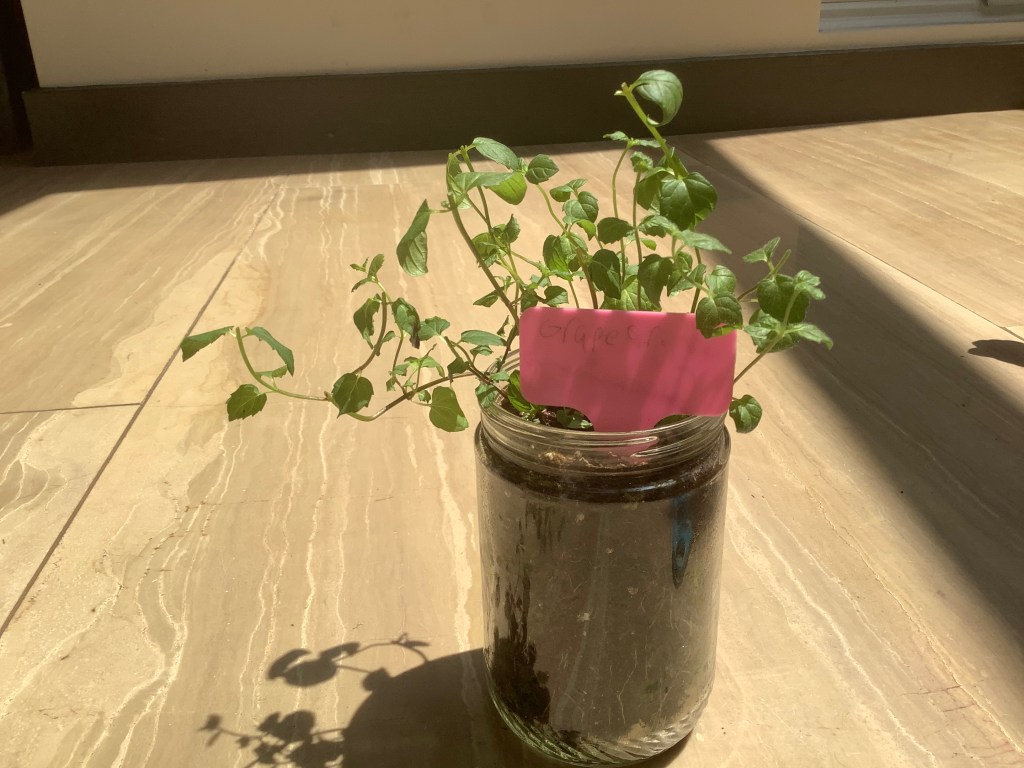
How to prune mint. Pruning the mason jar herb garden!

Hi guys! Today we are going prune our mint and chives in the mason jar herb garden!

let’s start with our mint! Trimming mint is like trimming basil. You cut the stem at a leaf node so that your plant will get more bushy and put out more new growth.
Check out my post about pruning basil here: https://tigershakti.wordpress.com/2020/07/27/how-to-prune-basil/

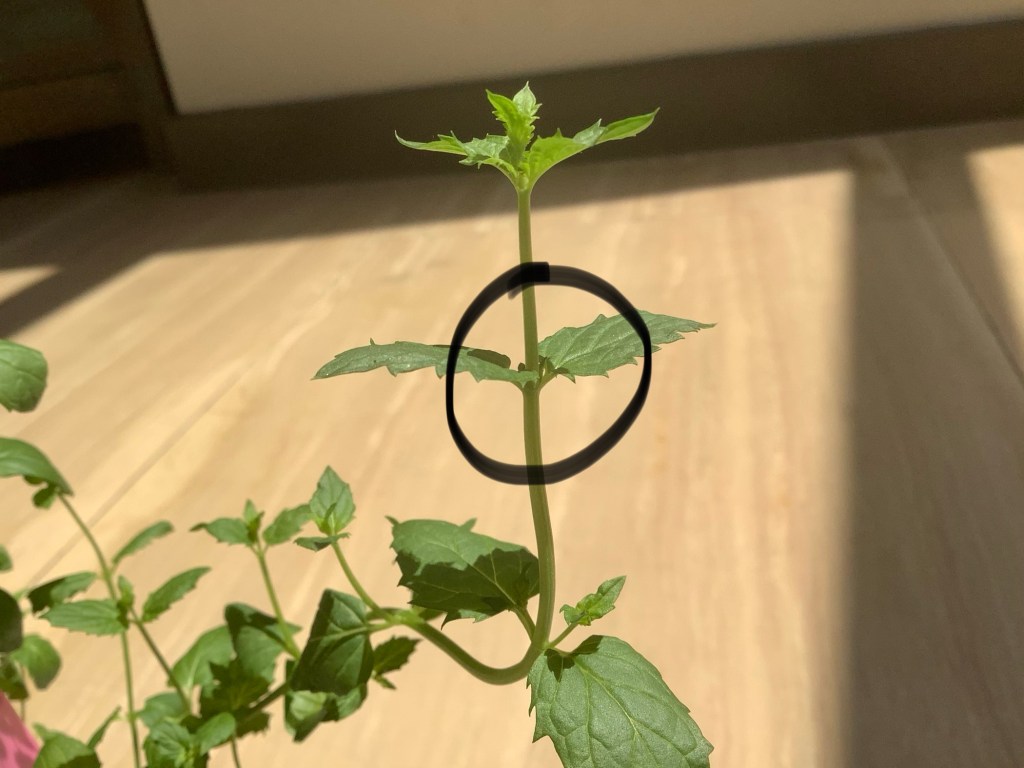
Here is what a leaf node looks like on a mint plant:

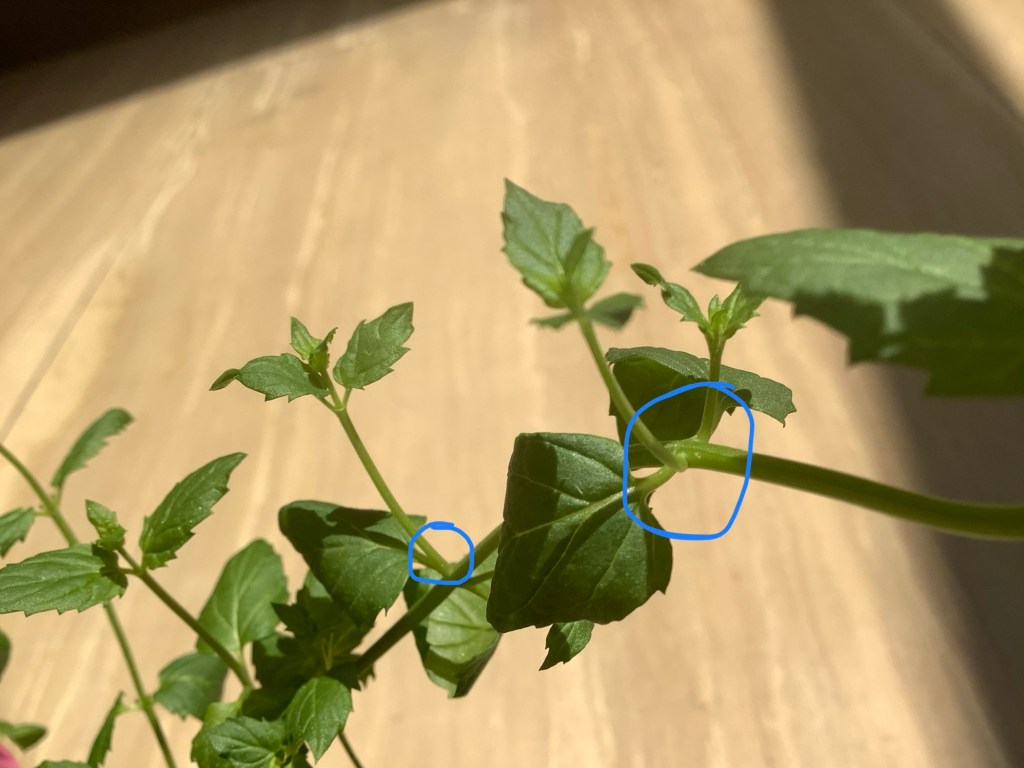
Sometimes when your mint stem gets pretty thick, you will start to see little branches coming out of the leaf node before you even cut the stem!

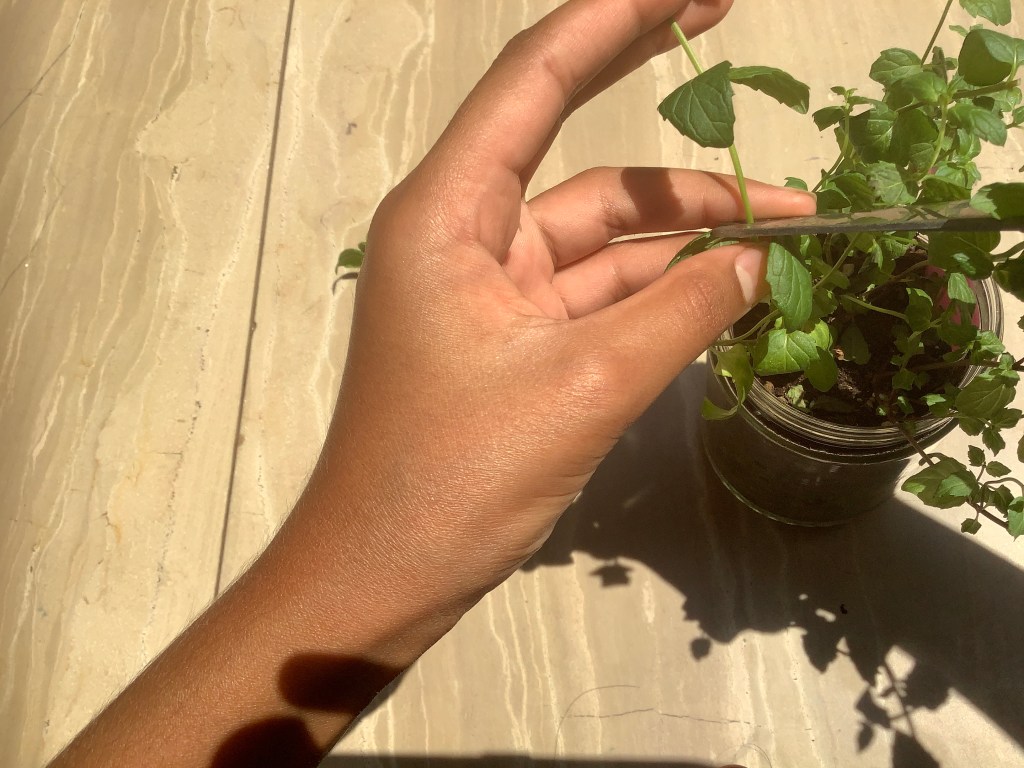
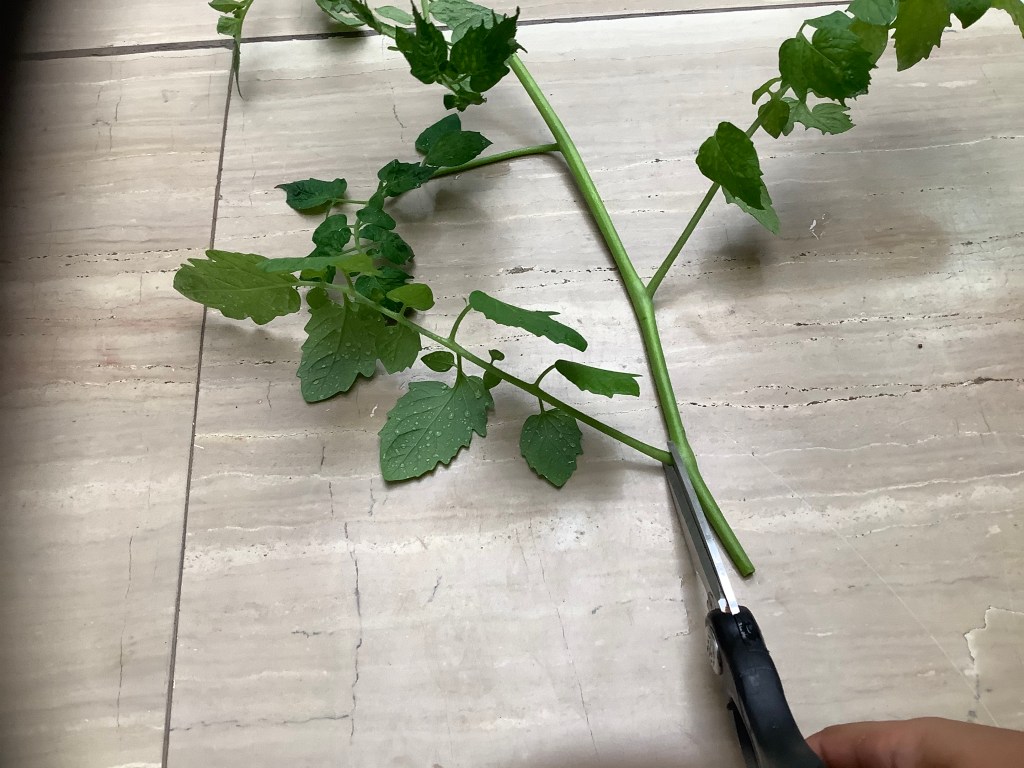
Because mint grows so aggressively, you can cut your plant pretty low on the stem. Here is how I pruned my mint:

Remember, cut the stem right above a set of leaves!(a leaf node)

Here is a mint stem that I cut in another tutorial. See how the one stem branches off into two at the leaf node? That is what we are going for. Nice and bushy growth!

That is how you prune mint!
Here is the plant before and after:

Like we did here, you can still cut mint back pretty aggressively and your plant will grow back stronger then ever.

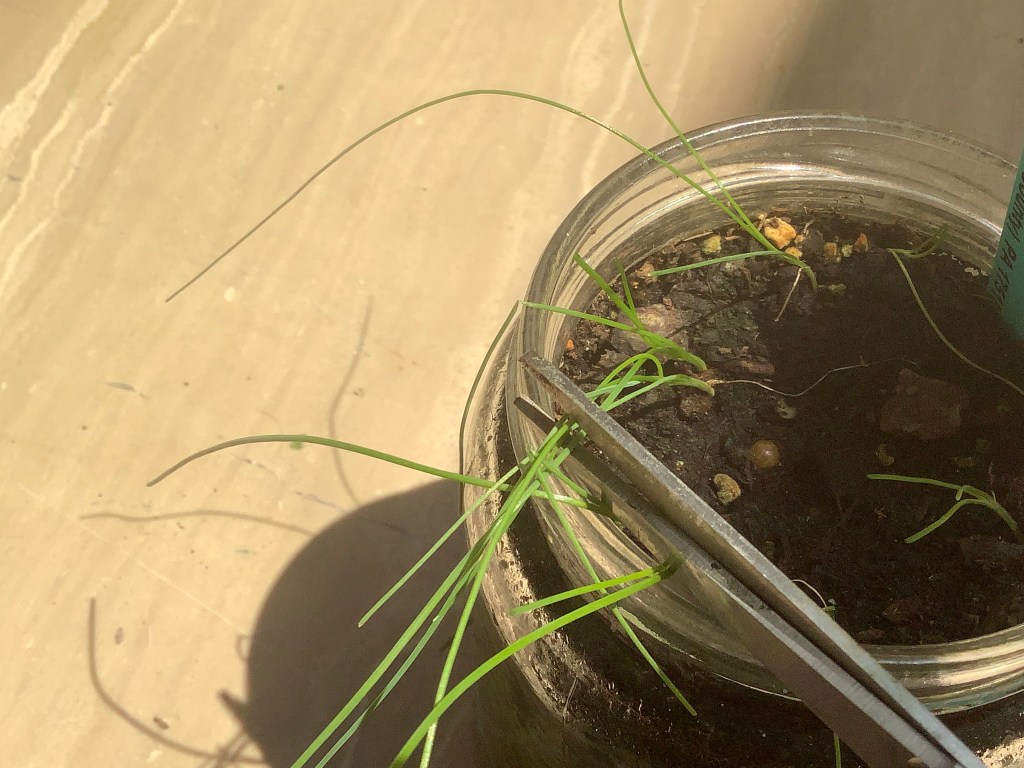
For the chives all I am going to do is to give them a little haircut so they keep growing.

Before we rap up this post I want to say that when you first start your mason jar herb garden, it will take a little while for it to start producing a usable amount of herbs. So that is all the more reason to start your own mason jar herb garden right now! Make sure you check out my other mason jar herb garden posts!

That is it for today’s post! I hope you enjoyed it! See u guys on my next post! Bye!
Fertilizing my citrus plants/trees!
Hi guys! Today I am going to be fertilizing my citrus plants/trees. I am going to be doing this in a video today! See you there!

How to propagate a tomato branch to get another tomato plant!

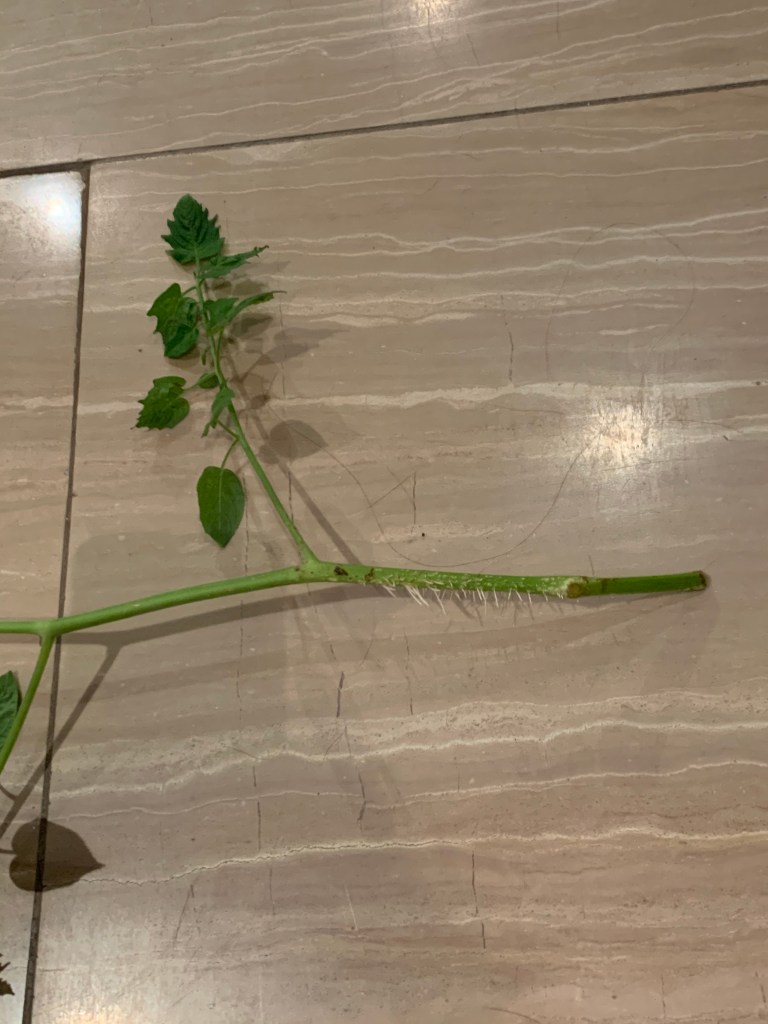
Hi guys! Today I am going to show you how you can take a broken tomato branch, (or sucker) and turn it into a new plant! Let’s get started!

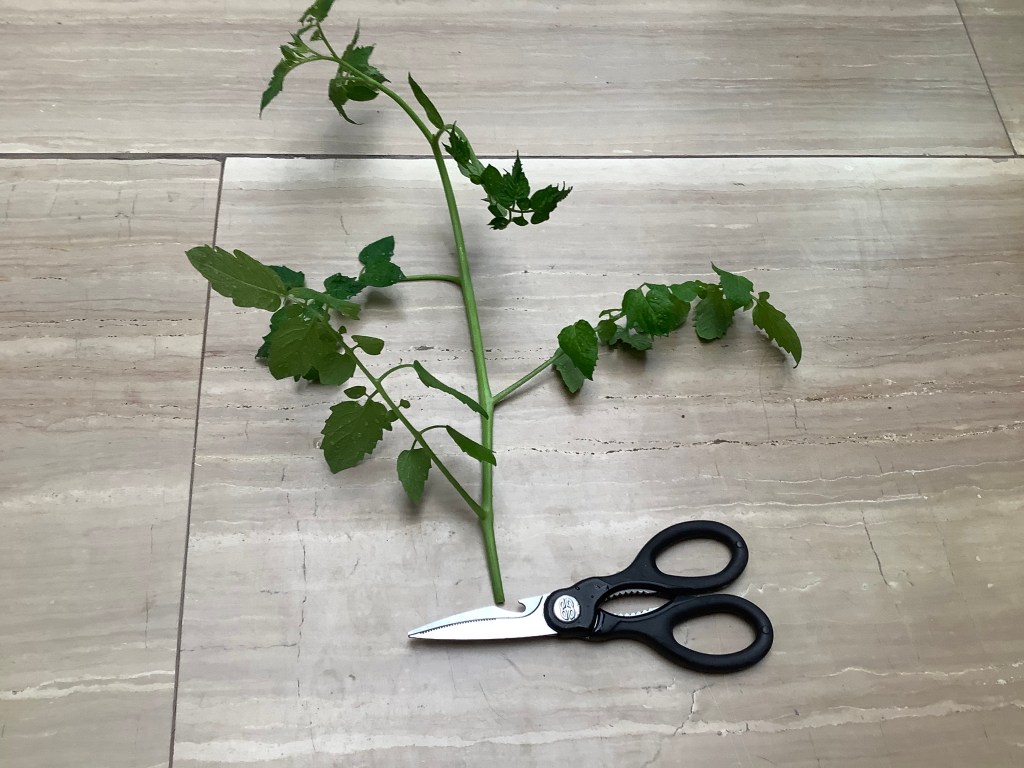
First you need your branch. Mine is a bit big, but you can definitely use a smaller branch.

Next we need to prepare our branch. To do this, all you need to do is to snip off the lower leaves on your tomato plant. Also, if there are any flowers, gently remove them. This way your branch will focus on making roots instead of making one last batch of flowers.

Once you’re done that, you need to get a container that can hold water and that is big enough for your branch. Fill it up with tap water.

Now, put your branch in your container with water.

Also, as an experiment, I am also going to try propagating some large tomato leaves.

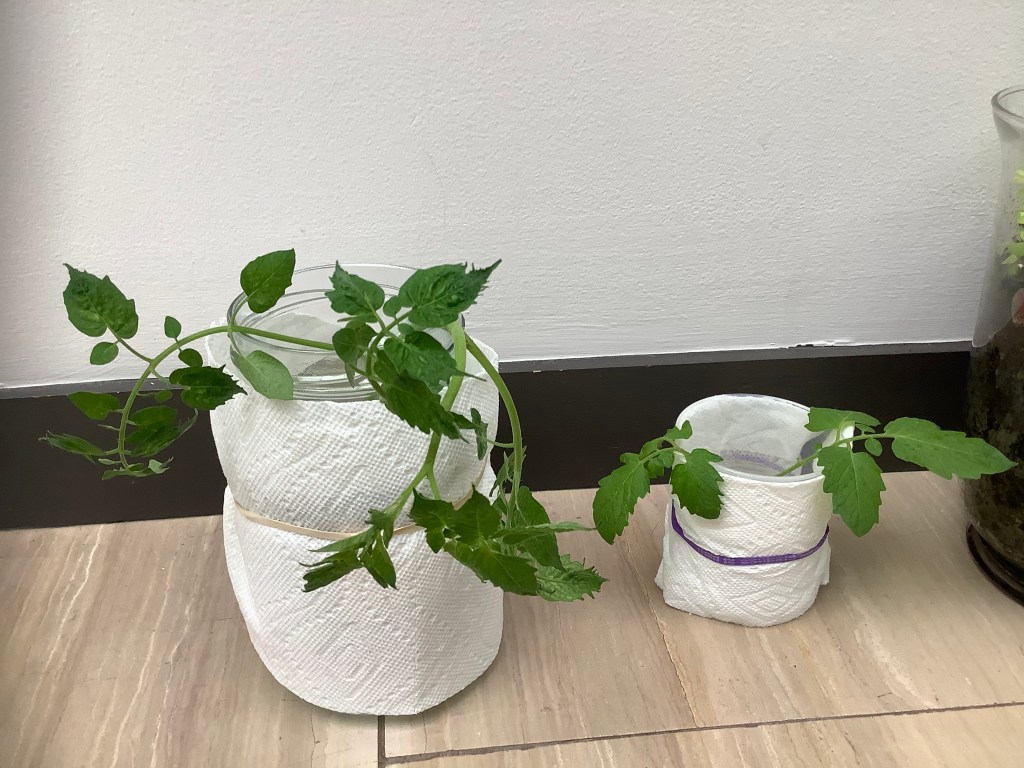
All that’s left to do is to put your branch in a mostly sunny area, (it they are in super intense light, it can shock them) and if your container is clear, cover it’s sides with a paper towel to minimize the amount of sunlight that hits the water. (To much sunlight in the water can encourage algae to grow.

That’s it for today’s post! I hope you enjoyed it! I will be posting updates on the tomato branches! Bye!

How to set up a watercolor pallet! (Part 2)

Hey guys! I am going to try a new posting schedule – every Friday and Monday. Plus if I have the time, I might add extra posts in the middle. Now let’s get started!

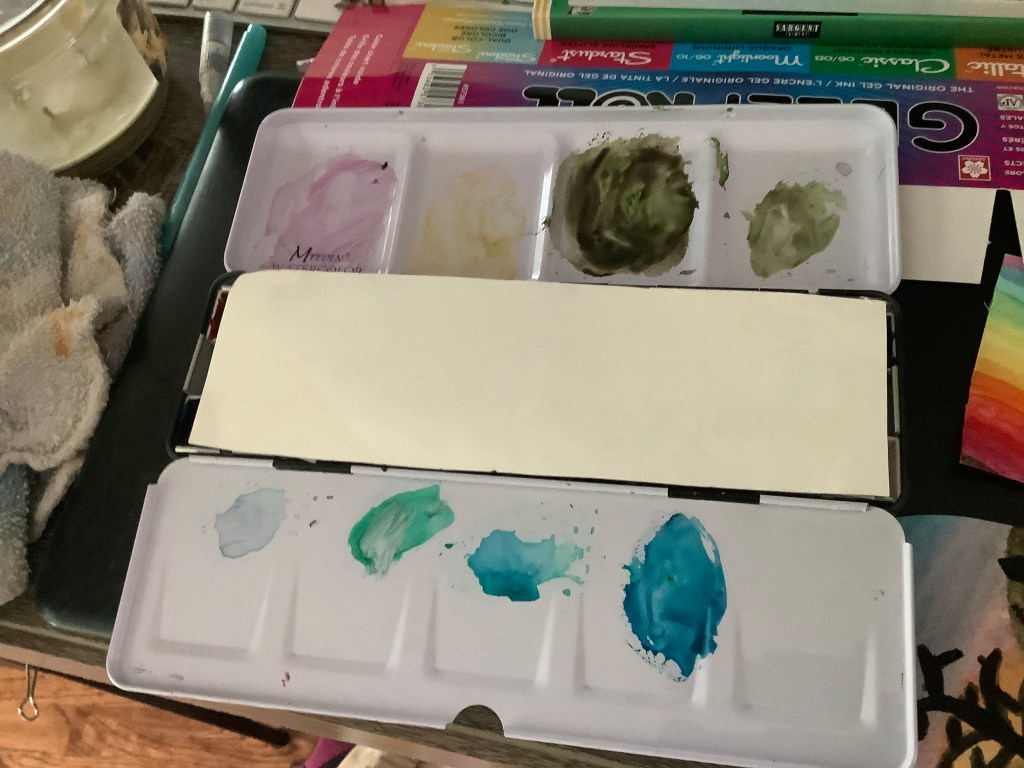
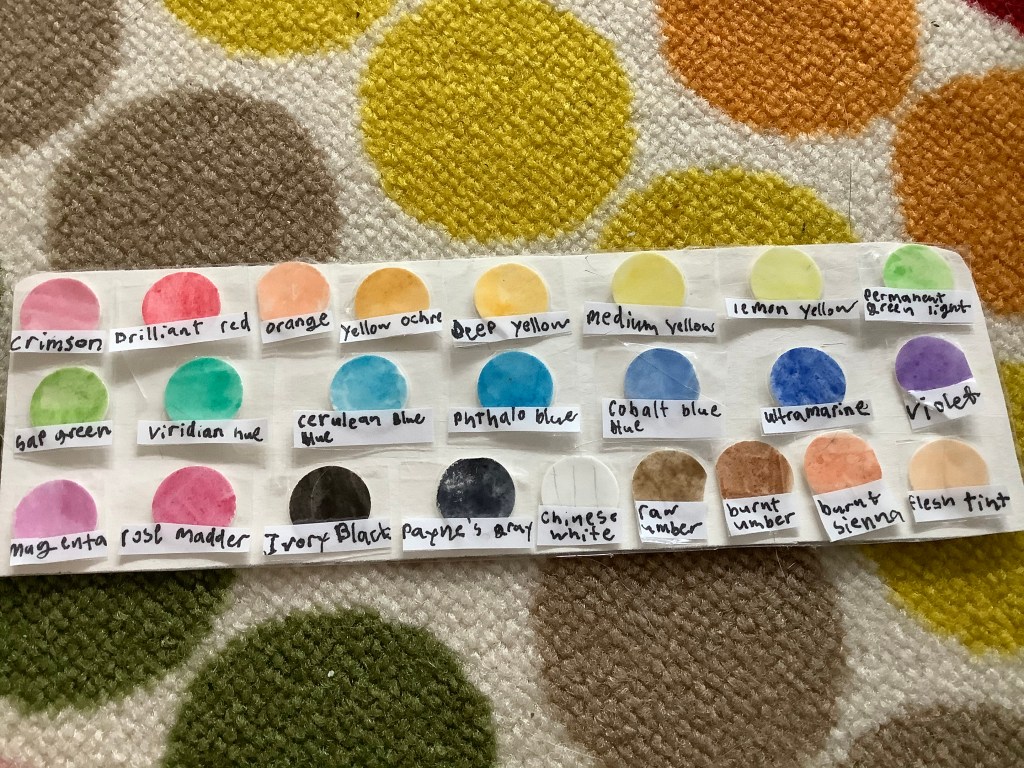
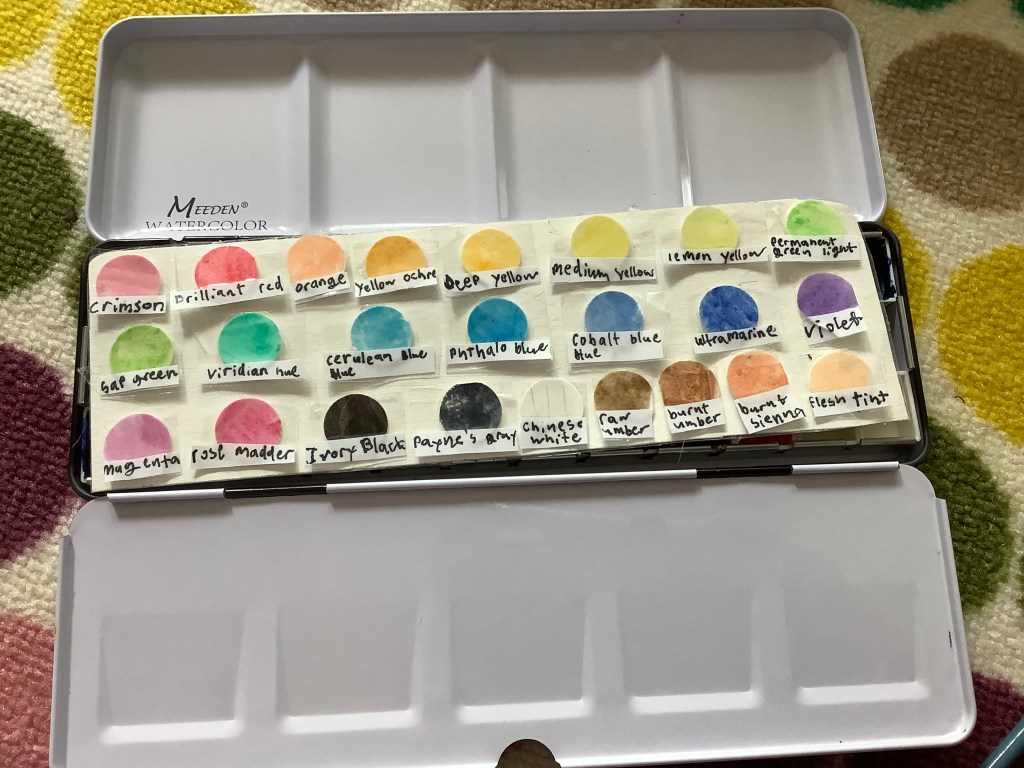
It’s time to finish setting up our watercolor pallet! Today we are going to label our colors and make a color reference. Labeling your colors makes everything easier because that way it’s easy to match your colors to your color chart. Plus, the color chart is important because when the watercolors in your pallet are dry, they tend to not look the same when they are painted on paper.

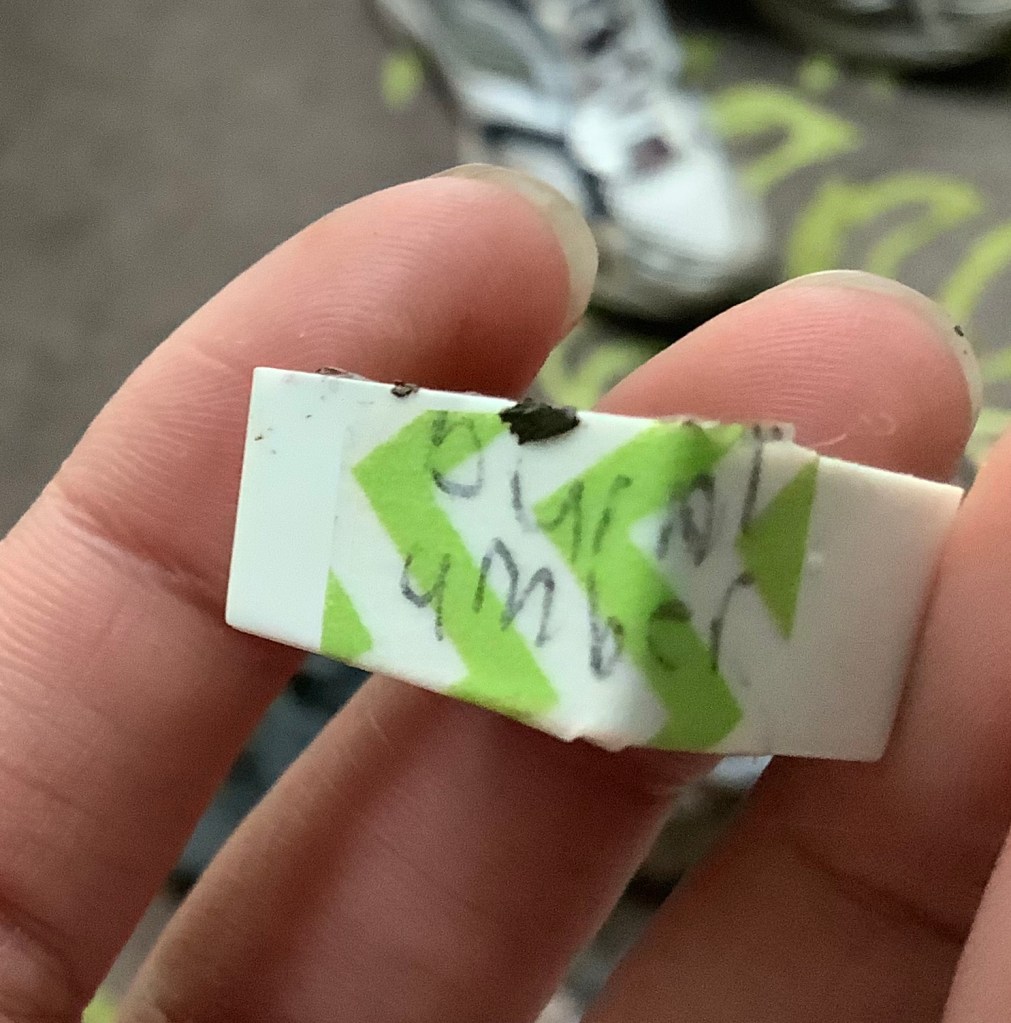
First, let’s start by labeling our pans. I used a piece of washi or masking tape and stuck it to the pan with the color name on it, so I can take it off and change the color if I wanted to.

Once that is done, it’s time to make our color reference or color chart!
To start, cut a piece of watercolor paper that fits inside your pallet.

If you want to make yours simple all you have to do is make little swatches of each color in the order you want them in your pallet, and once they’re dry, you can just write the color names.

I like to take mine to the next step, and make it adjustable and waterproof! If you want to learn how to do that, keep on reading.

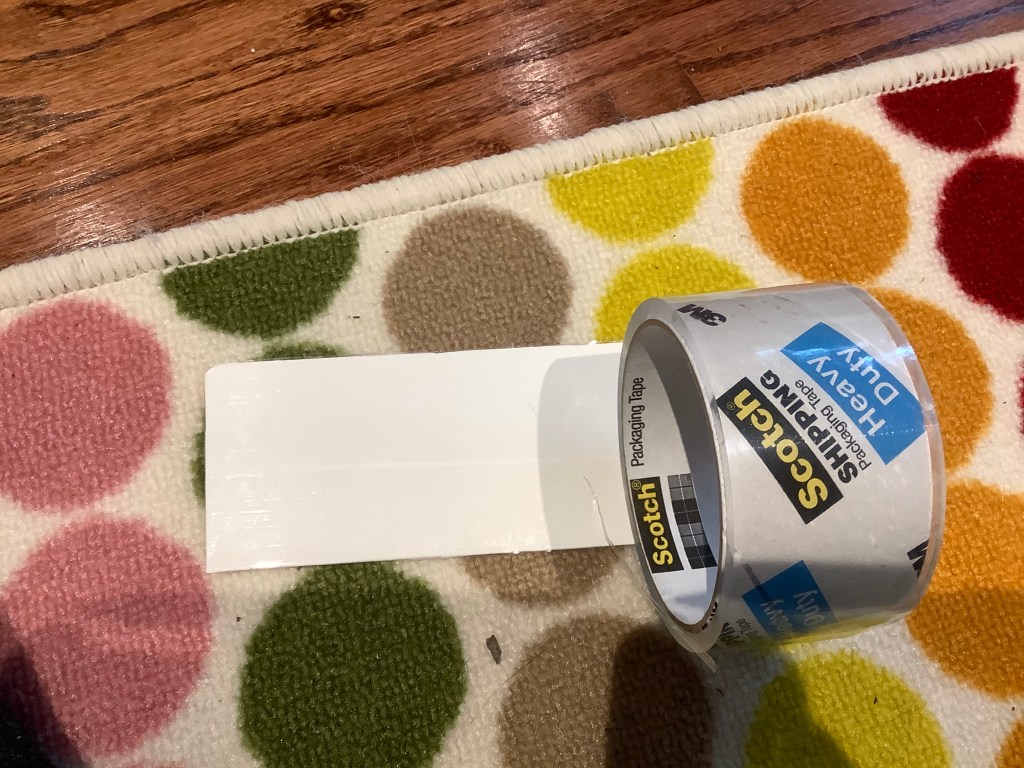
Now it’s time to make our more complicated color reference. To start, cut a piece of watercolor paper that fits inside your pallet. Then, on a separate piece of watercolor paper, Make all the color swatches and quickly write the color name so you don’t forget. Then, while that is drying, take the watercolor paper that is cut to fit your palate, and cover it with packing tape.

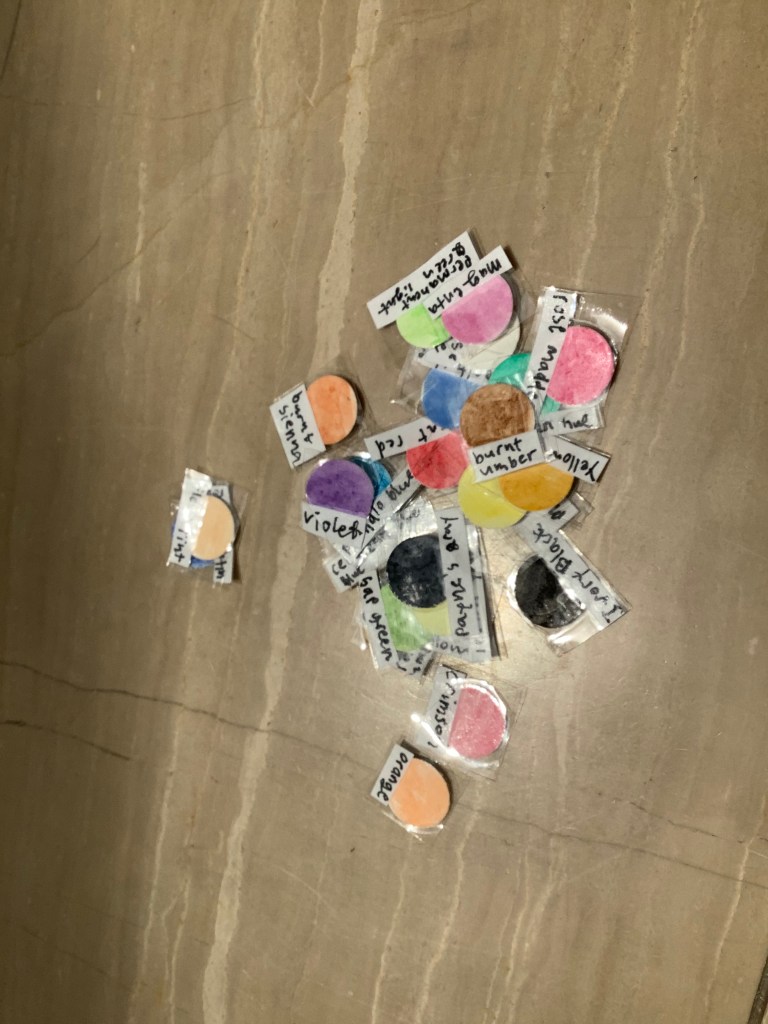
Once that is done, cut little color blocks out of your swatches. (If they are wet, they may tear) Also, write small color names to fit with your now cut out color swatches. After that is finished, take your packing tape, or normal tape, and “laminate” your swatches with their color tag. (Make sure that the back is also covered)

Next, take some glue dots and stick them on the back of your swatches and then put them on your laminated cut out piece of watercolor paper. Arrange them till you are happy with how it looks.

You can also make little tape rolls and use those as an alternative to the glue dots.

Once you have your color chart, you’re done! Now you can see what every color truly looks like, and have the ability to rearrange them without having to make a new chart! See you soon!